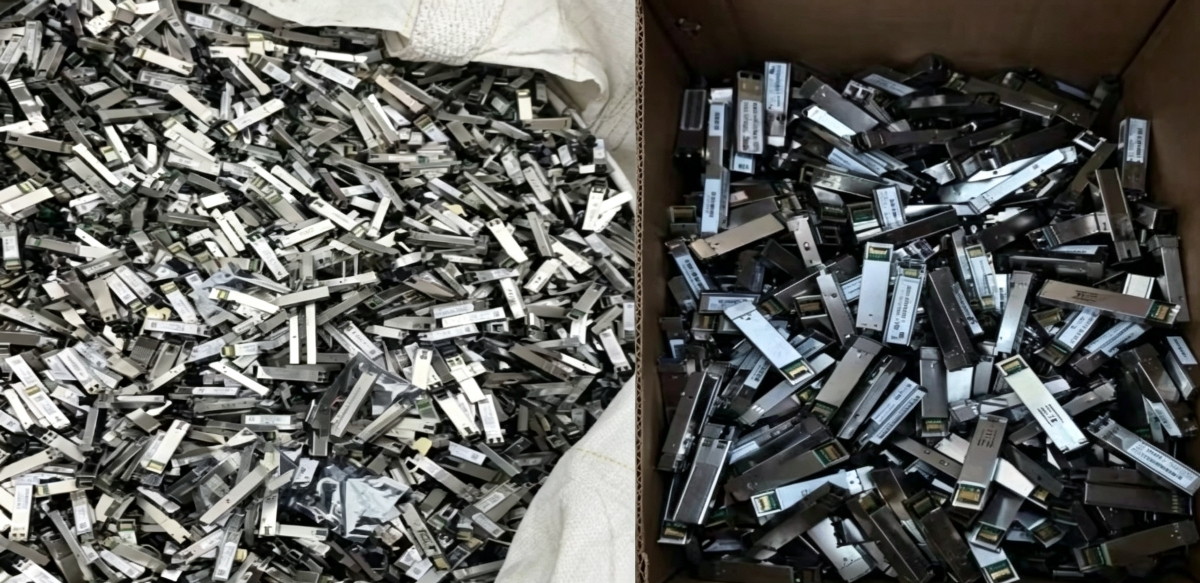
Eco-friendly Recycling and Standardized Disposal of Used Optical Modules: Industry Trends and Practical Approaches
In the era of rapid iteration of digital communication and cloud computing infrastructure, optical modules, as the core component for converting optical signals into electrical signals, have a replacement cycle that is closely synchronized with technological advancements. As enterprises upgrade their business and equipment reach the end of their lifespan, the disposal of a large number of obsolete optical modules has become increasingly prominent. The proper disposal of these modules directly affects the efficiency of resource recycling and the safety of the ecological environment. Under Hong Kong's strict environmental protection regulatory framework, the environmentally friendly recycling and proper disposal of obsolete optical modules have become important topics in enterprises' ESG (Environment, Society and Governance) strategies and industry compliance development.
I. The Resource Value and Environmental Significance of End-of-Life Optical Modules
Optical modules, as precision electronic components, have internal structures that include optical elements, electronic chips, metal casings, and high-molecular materials. If they are discarded carelessly or handled illegally, not only will it cause a huge waste of rare metal resources, but it may also lead to long-term pollution of soil, water sources and the ecological chain due to the presence of heavy metals such as lead and mercury, as well as toxic substances.
Standardized environmental protection recycling has dual value:
Resource regeneration value: The precious metals and rare metals such as gold, silver, copper, indium, and tin contained in optical modules can be recycled through professional sorting and regeneration processes, enabling the circular utilization of high-value resources and contributing to the establishment of a circular economy system.
2. Environmental protection value: Through harmless treatment, the risk of leakage of toxic and harmful substances can be completely eliminated, protecting the surrounding ecology and human health. It fully complies with the strict requirements of the Hong Kong "Waste Disposal Ordinance" and the "Product Environmental Responsibility Ordinance".
II. Compliance Requirements and Challenges for the Disposal of Used Optical Modules in the Hong Kong Region
As an international metropolis, Hong Kong has globally leading and strict regulations for the disposal of electronic waste. The disposal of used optical modules requires a complete set of compliance procedures. Any omission in any step could lead to the risk of violation.
Qualification Admission Threshold
The disposal institution must hold the "Waste Disposal License" issued by the Hong Kong Environmental Protection Department and possess the specialized qualifications for handling hazardous waste. Disposing without a license is a criminal offense and will result in heavy fines and imprisonment. This is the first "firewall" for industry entry.
2. Full-process closed-loop control management
The disposal process should cover six major steps: assessment, classification, sealing, compliant transportation, professional handling, and report issuance.
Evaluation and classification: The modules should be precisely categorized based on their model, integrity, and whether they contain confidential data, etc., and divided into three categories: reusable, resourceful processing, and harmless destruction.
◦ Compliance transportation: Only vehicles with the qualifications for sealing, leak-proofing and GPS tracking must be used to ensure a transparent and traceable process.
◦ Professional handling: Strictly prohibit the use of illegal methods such as open-air incineration or violent dismantling. It is necessary to be equipped with facilities for treating exhaust gases, wastewater and solid waste, and adopt environmentally friendly processes like high-temperature melting and chemical sorting to ensure that the operation process complies with environmental monitoring standards.
◦ Reporting and Traceability: A complete record ledger and disposal report must be established, providing verifiable evidence chains to meet the verification requirements of internal audits within the enterprise, customs clearance, and regulatory authorities.
III. Core Processes and Practical Paths of Professional Environmental Waste Recycling
Professional recycling of used optical modules is not merely a "recycling" process; it is a comprehensive system solution that integrates technology, management and compliance.
Step 1: Preliminary assessment and classification/grading
A professional team conducts on-site inventory checks. Based on module information, status and enterprise requirements, they carry out a three-dimensional classification:
• Reusable Class: Modules that are in good appearance and functional condition. After being inspected and repaired, they can be re-entered into the supply chain or second-hand market through compliant channels.
• Resource recycling type: Modules that cannot be repaired but have metal recovery value. Through physical disassembly, chemical sorting, high-temperature smelting and other processes, precious metals such as gold, silver, copper, indium, and basic materials are separated and extracted to achieve maximum resource recovery.
• Harmless destruction category: Modules containing confidential data or those that cannot be recycled. They are destroyed using professional techniques to ensure that the information and the materials are completely irreversibly eliminated, completely eliminating the risks.
Step 2: Full-process compliance control
• Sealed transportation: Special sealed transportation vehicles are used, with continuous GPS positioning throughout the process. This ensures that the modules will not leak, be lost or damaged during transportation.
• Professional Disposal: In a place with environmental protection approval qualifications, use processes that comply with environmental protection standards to avoid secondary pollution. For toxic and hazardous components, adopt methods such as high-temperature curing and chemical stabilization for harmless treatment.
• Report issuance: After the disposal is completed, a comprehensive report including the number of modules, disposal process, resource recovery situation, and environmental protection compliance certificate will be issued. This forms a traceable closed loop, providing a solid basis for enterprises to achieve compliance and ESG management.
IV. Common Mistakes in Enterprise Disposal and Optimal Choices
In actual business operations, enterprises often encounter the following misunderstandings that require careful avoidance:
Misconception 1: "Waste optical modules have no value and should be simply discarded."
Consequences: It leads to waste of resources, and at the same time creates potential risks of environmental pollution and non-compliance with regulations.
Myth 2: "Search for low-cost disposal channels to quickly realize profits."
Consequence: Low-price disposal is often accompanied by unqualified and non-compliant procedures. Eventually, it may lead to enterprises incurring higher compliance costs, environmental fines, and damage to their brand reputation.
Myth 3: "Ignoring data security risks."
Consequence: Some modules may still contain business data. Improper handling could lead to information leakage and trigger legal risks.
The optimal choice for an enterprise:
The preferred choice should be a professional environmental protection agency that possesses formal qualifications, has ISO management system certification, has mature processes and transparent procedures.
• The value of professional institutions: They can not only achieve the compliant recycling and regeneration of resources, reducing enterprise costs; but also provide one-stop services such as confidential data destruction, full-process traceability, and the issuance of compliance reports.
• Strategic Significance: This is not merely a matter of disposing of materials; it is also an important practice for the enterprise to fulfill its environmental protection responsibilities, strengthen compliance management, and enhance its ESG rating. It helps the enterprise build long-term competitiveness in international competition.
V. Industry Trends and Future Prospects
With the continuous tightening of global environmental protection regulations and the deepening of the ESG concepts among enterprises, the environmental disposal of used optical modules will exhibit three major trends:
1. Precision: The disposal process will rely more on precise sorting and resource recycling technologies to maximize the extraction of resource value.
2. Systematization: Incorporate the core aspects of enterprise supply chain management, forming a closed-loop management system covering the entire life cycle from procurement, usage to retirement.
3. Internationalization: The standards will align with international environmental protection regulations and become the basic threshold for enterprises to participate in global cooperation.
Professional environmental recycling and disposal is an inevitable choice for enterprises to fulfill their social responsibilities, ensure compliant operations, and build a sustainable future. In the internationalized environment of Hong Kong, choosing a partner with professional qualifications and experience in environmental disposal will inject lasting momentum into the long-term development of the enterprise.
Mainland phone: 13049844111
Email address: 13049844111@163.com
Hong Kong phone: 852-52664790. Liangji Recycling Co., Ltd. looks forward to your call and is eager to jointly embark on a new chapter where environmental protection and value coexist!
The Lianji recycling system has obtained certifications through international standards such as quality management (ISO 9001), environmental management (ISO 14001), and information security management (ISO 27001). It is safe, formal, and professional - we look forward to your call and are eager to jointly embark on a new chapter where environmental protection and value coexist!