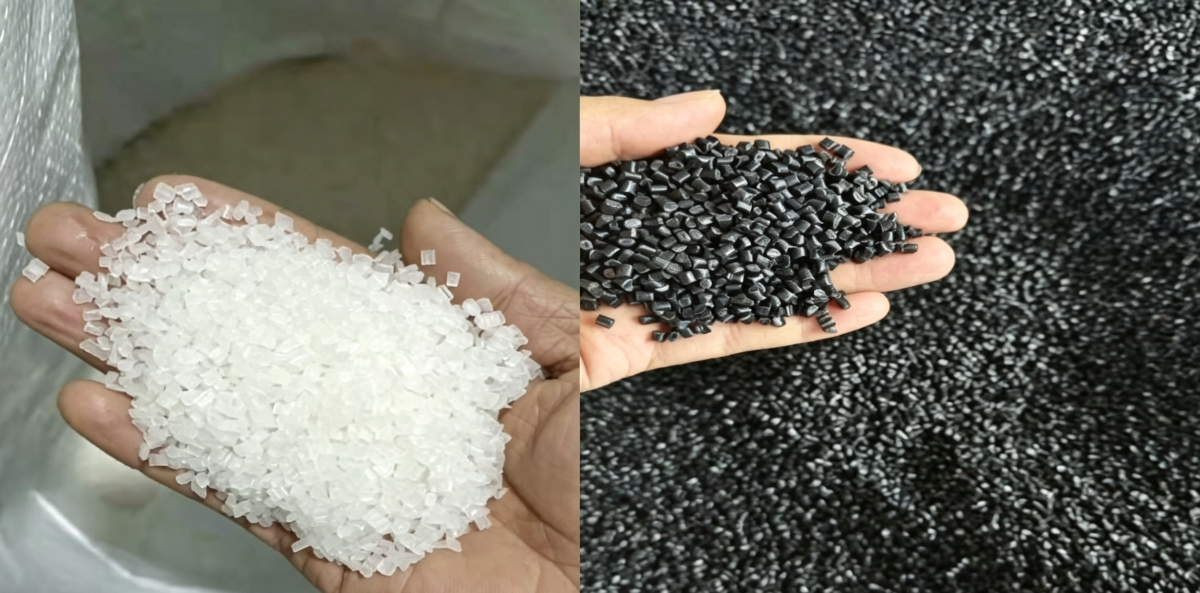
Recycling and processing of plastic particles at the port
The four core dimensions for identifying non-renewable materials and the specific identification methods:
1. Material Type: Thermosetting plastics are "a major drawback"
This is the most straightforward elimination criterion. Thermosetting plastics undergo an irreversible cross-linking reaction after being heated and molded, and cannot be remelted and reshaped.
• Typical types: Epoxy resin, phenolic resin ( bakelite ), unsaturated polyester ( fiberglass reinforced plastic ), polyurethane ( some hard foams ).
• Judging method: Take a sample and heat it. If it does not melt but only undergoes carbonization and decomposition, it is classified as a thermosetting plastic and is directly determined as non-renewable.
II. Degree of Pollution: The "Death Penalty" for Severe Pollution
Even if the material itself is fusible, if it is contaminated with non-removable impurities, it will result in a sharp decline in the performance of the recycled material.
• Determine the red line:
◦ Oil contamination/chemical pollution: Contamination with engine oil, solvents or unknown chemical residues. The cleaning cost is extremely high and there are environmental risks involved.
◦ Composite/coated materials: Featuring a strong aluminum-plastic composite layer (such as a drug plate), an electroplated layer or a painted coating, which cannot be separated by physical sorting.
◦ Biological/mold contamination: Severe mold growth, decay or mixed with a large amount of sand and metal debris.
III. Aging and Degradation: Performance is "Dead"
Plastic particles may experience molecular chain breakage and lose their mechanical properties when stored for a long time or under improper conditions.
• Identification features:
◦ Appearance: Severe yellowing, brittle texture, and surface powdering.
Performance test: The melt index (MFI) shows an abnormally high (degradation) or sharp decrease (crosslinking) value.
◦ Application failure: Even if granulation can be achieved, the tensile strength and impact strength of the product still fail to meet the minimum industrial application standards.
IV. Regulations and Safety: Compliance "Final Decision-Maker"
Under the strict environmental protection regulations in Hong Kong, some particles have been forcibly classified as hazardous waste due to compliance issues, and are prohibited from entering the regular recycling process.
• Risk Category:
◦ Containing hazardous chemicals: Includes substances such as heavy metals (like lead and cadmium), and polybrominated biphenyls (PBBs), which are controlled substances.
◦ Medical/radiation contamination: Suspected exposure to medical waste or radioactive contamination (requires professional equipment for screening).
Standard Operating Procedure for On-Site Identification of Recycled Materials
In actual operation, through three levels of screening, the non-renewable materials can be quickly identified:
1. Preliminary screening (visual inspection/interrogation): Check the MSDS (Material Safety Data Sheet), eliminate thermosetting plastics; Observe the color and smell, discard materials with obvious mold or oil stains.
2. Middle screen (physical test): Conduct a heating melting test to observe the fluidity; perform simple stretching or bending tests to determine the brittleness.
3. Final screening (instrumental analysis): For the questionable batches, Fourier Transform Infrared Spectroscopy (FTIR) is used to analyze the material composition, and an XRF fluorescence spectrometer is employed to detect the content of heavy metals.
Disposal suggestion
For the particles classified as "non-renewable materials", Qinghe Yangguang will strictly follow the guidelines of the Hong Kong Environmental Protection Department, classify them as solid waste, and transfer them to licensed facilities for energy utilization (such as co-processing with cement kilns) or safe landfill. At the same time, they will issue compliant disposal certificates to customers to ensure smooth customs clearance and no issues with environmental protection audits.
Mainland phone: 13049844111
Email address: 13049844111@163.com
Hong Kong phone: 852-52664790. Liangji Recycling Co., Ltd. looks forward to your call and is eager to jointly embark on a new chapter where environmental protection and value coexist!
The "Liangji" recycling program has obtained certifications through international standards such as quality management (ISO 9001), environmental management (ISO 14001), and information security management (ISO 27001). It is safe, formal, and professional - we look forward to your call to jointly embark on a new chapter where environmental protection and value coexist!