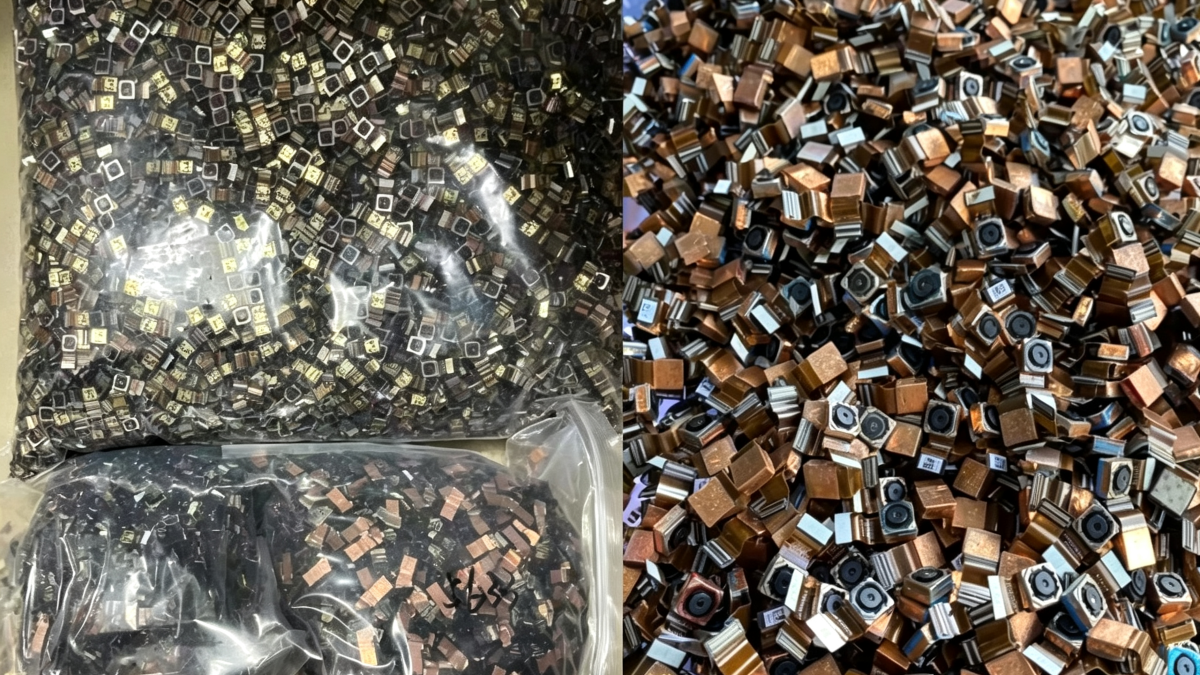
Hong Kong's Recycling of Used Cameras: Unlocking the Triple Value Codes of the "Electronic Mine"
In the current era of rapid technological evolution in intelligent imaging technology, the update cycles of electronic devices such as mobile phone camera modules and security surveillance cameras are constantly shortening. Hong Kong, as a global electronic trade hub and a center for the distribution of technological products, generates an enormous amount of used cameras and related accessories every year. These discarded products, which are regarded as "electronic waste", are actually valuable "urban mines" containing scarce resources, carrying industrial value, and related to environmental protection and safety. Relying on a complete policy system, advanced recycling technologies, and a closed-loop industrial ecosystem, the used camera recycling industry in Hong Kong is releasing far more than just "waste disposal" value. It is releasing value from three dimensions: resource extraction, industrial recycling, and environmental protection and safety.
1. Resource Recovery Value: Extracting Precious Wealth from "Electronic Waste"
The core value of used camera modules lies in the various precious resources contained in their precise structure. As highly integrated electronic components, camera modules have "wealth codes" in every part, such as chips, circuit boards, lens components, and drive mechanisms. Through professional technical processing, they can be transformed into high-value recycled resources.
The enrichment of precious metals is the core support for recycling value. In a single mobile phone camera module, the pins and circuit board plating of CMOS or CCD sensor chips can extract approximately 0.03 grams of gold and 0.3 grams of silver. High-end security camera chips, due to higher process requirements, have even more valuable rare metals such as palladium and rhodium. This seemingly small amount of value is astonishingly efficient when scaled up - according to industry data, the gold extraction from 1 ton of used camera modules and related accessories can reach over 200 grams, far exceeding the average grade of natural gold mines, and the recovery rate of copper and tin is over 90%. In Hong Kong's mature precious metal purification system, through green processes such as biological leaching and electrolytic refining, the purity of recovered gold can reach 99.99%, directly meeting the reuse standards for jewelry manufacturing and semiconductor industries, forming a value closed loop of "waste - purification - recycled raw materials".
In addition to precious metals, the recycling of various special materials also has significant economic value. The optical glass of camera lenses, after sorting, grinding, and re-coating, can be used to manufacture low-end optical products or industrial detection equipment; the epoxy resin in packaging materials can be recycled and re-manufactured into engineering plastics, used to produce automotive parts, electronic enclosures, etc.; components such as voice coil motors (VCM) and infrared filters in the modules, after inspection and repair, can be directly used as maintenance spare parts or supplied for low-load scenarios. The recycling of these materials not only reduces reliance on primary mineral resources but also provides low-cost alternative raw materials for the manufacturing industry, forming a new path for sustainable resource supply.
2. Industrial Recycling Value: The Synergistic Momentum of Connecting Cross-border Industrial Chains
The value of Hong Kong's used camera recycling goes beyond simple resource extraction and extends to a key link in supporting the circularity of the electronic industry ecosystem. Leveraging the location advantages of an international free trade port and the policy guarantee of the "Waste Electrical and Electronic Equipment Producer Responsibility Scheme", Hong Kong has built a full-chain industrial system of "recycling - inspection - dismantling - regeneration - reuse", becoming an important hub for the electronic industry's circularity in the Guangdong-Hong Kong-Macao Greater Bay Area and globally.
The secondary reuse of functional components provides new options for reducing costs and increasing efficiency in the industrial chain. Not all used cameras need to be completely disassembled. Some modules that are only discarded due to equipment renewal, appearance defects, or minor malfunctions can be functionally regenerated after professional inspection and repair. For example, functional and intact rear camera modules of mobile phones, after cleaning and calibration, can be supplied to the second-hand phone repair market or used in the production of low-end models; specialized camera components from discontinued models, due to stable market demand, have a recycling and reuse price even higher than ordinary new parts. Hong Kong recycling enterprises, through artificial intelligence detection systems and automated sorting equipment, can quickly identify reusable components, increasing the screening efficiency by more than three times. This not only reduces the raw material costs for manufacturing enterprises but also extends the product lifecycle.
Cross-border industrial collaboration further amplifies the value of recycling. As a hub connecting the mainland and the global market, Hong Kong can, on the one hand, gather global compliant sources of used cameras through efficient cross-border logistics and customs clearance processes; on the other hand, it can conveniently supply the refined recycled metals and repaired functional components to the electronic manufacturing bases in the Guangdong-Hong Kong-Macao Greater Bay Area, forming a cross-border recycling chain of "global recycling - Hong Kong processing - reuse in the bay area". This collaborative model not only creates a sub-market worth over 10 billion yuan for Hong Kong's local economy but also alleviates the reliance of the electronic information industry on imported precious metals, enhancing the resilience and sustainability of the regional industrial chain.
III. Environmental and Safety Value: Guarding the Bottom Line of Urban Ecology and Data Security
Beyond the value of resources, the standardized recycling of used cameras in Hong Kong also carries irreplaceable environmental significance and security functions, serving as an important support for the sustainable development of the city.
From an environmental perspective, standardized recycling effectively curbs the environmental pollution risks of electronic waste. The lead, mercury, cadmium, and other heavy metals used in camera manufacturing, as well as brominated flame retardants and other harmful substances, if not treated and disposed of randomly or illegally dismantled, will gradually seep into the soil and water sources, causing long-term damage to the ecosystem. Hong Kong's professional recycling system, through the full-process control of "separate packaging - specialized disposal - harmless treatment", safely separates and decomposes harmful substances, with the core processing hub WEEE·PARK alone being able to reduce carbon dioxide emissions equivalent to the absorption capacity of 2.5 million trees through standardized treatment each year. At the same time, resource recycling replaces primary resource extraction, reducing energy consumption and pollution emissions in mining, processing, and other links, achieving the dual environmental goals of "reduction" and "improvement".
Mainland phone: 13049844111
Email address: 13049844111@163.com
Hong Kong phone: 852-52664790, Liangji Recycling and Reuse Co., Ltd. Looking forward to your call, together we will embark on a new chapter of environmental protection and value coexistence!
Liangji Recycling and Reuse has obtained international standard certifications such as quality management (ISO 9001), environmental management (ISO 14001), and information security management (ISO 27001), being safe, formal, and professional - looking forward to your call, together we will embark on a new chapter of environmental protection and value coexistence!