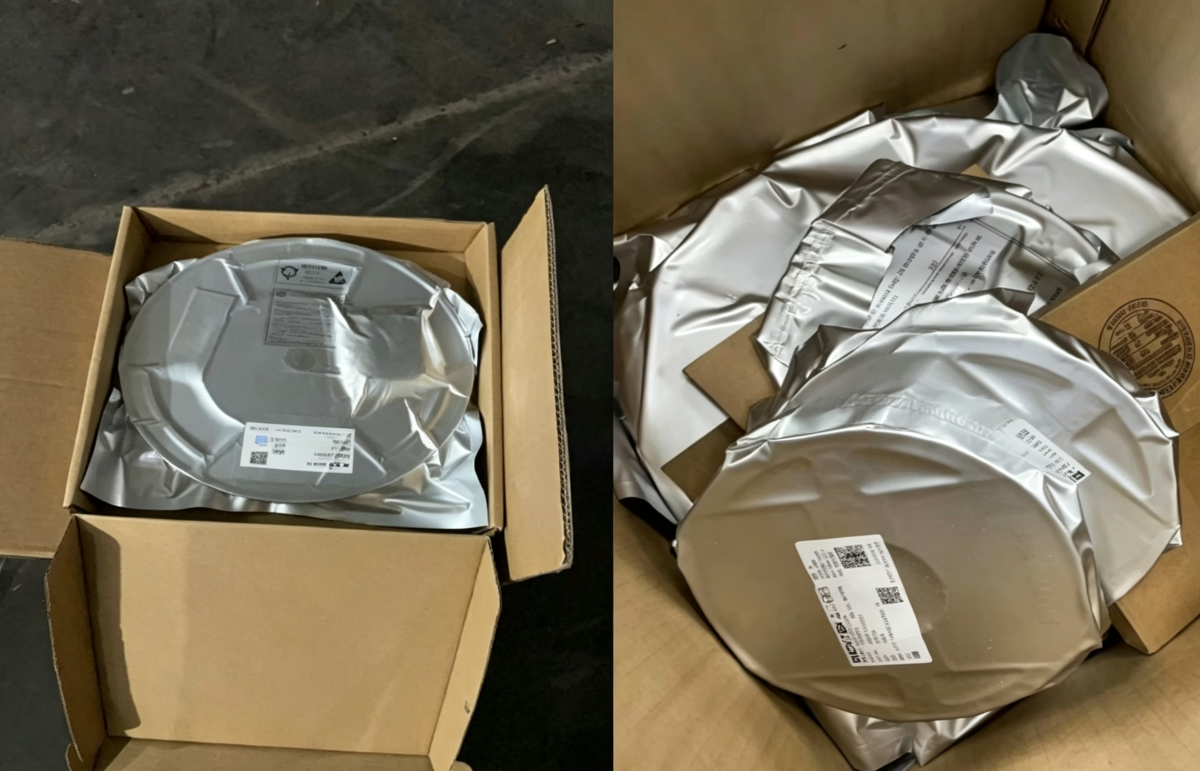
Recycling of Retired IC Components and Inventory End-of-Life Goods in Hong Kong: A Pathway for Resource Circulation within a Compliance Framework
In the global electronc industry supply chain, the disposal of retired IC components and inventory end-of-life goods has always been a focal point of industry attention. Hong Kong, leveraging its unique geographical advantages, a well-established regulatory system, and a mature recycling network, has established a comprehensive compliance recycling processing mechanism covering all categories and the entire process. This enables the scientific disposal and efficient regeneration of various retired ICs and overstocked inventory end-of-life goods. It not only resolves the problem of enterprise warehouse overstock but also embodies the concept of circular economy.
The recycling of retired IC components and inventory end-of-life goods begins with clarifying the "retirement" attributes and compliance boundaries. These materials, due to their cross-border circulation and regulatory nature, must follow customs and environmental protection regulations for their recycling processing. Retired IC components are mainly divided into two categories: "retirement from a bonded status" and "retirement after being taxed and imported". The former requires completing the customs declaration and cancellation procedures and obtaining the "Exported Goods Return Declaration and Reimbursement (Not Tax Refund) Certificate" to confirm the disposal authority, avoiding violating regulatory provisions by unauthorized disposal of bonded goods; the latter requires clarifying the source and status of the goods, excluding intellectual property infringement or "foreign waste" and other prohibited or restricted situations. Hong Kong's "Product Environmental Responsibility Ordinance" and the optimized waste electrical and electronic equipment producer responsibility scheme provide a solid legal foundation for the recycling process, requiring all recycling enterprises to hold the "Waste Disposal License" issued by the Environmental Protection Department and obtain a special license for the import and export of waste electronic components to ensure full compliance and traceability throughout the process.
Hong Kong's recycling system is characterized by its "inclusive coverage of all categories", breaking the limitations of brands, models, and statuses, and achieving comprehensive coverage of retired ICs and inventory end-of-life goods. The recyclable IC components include two core categories: active components and passive components. Active components include various brands of CPUs, memory, logic chips, RF chips, etc., regardless of whether they are original正品 or compatible with mainstream models, can be included in the recycling scope; passive components cover resistors, capacitors, inductors, crystal oscillators, etc., even if they are leftover scraps from production, can find corresponding handling paths. From the perspective of status, brand-new, unopened, and fully functional inventory end-of-life goods can be re-entered into circulation after passing market entry standards testing; slightly damaged, with oxidized pins but with core functions intact, IC components can be restored to use value through professional repair; completely scrapped components that cannot be repaired can be recycled through precious metal extraction to achieve resource regeneration. This non-discriminatory acceptance model is rooted in the fact that Hong Kong gathers a diverse range of enterprises with qualifications for bonded goods disposal, electronic component repair, and hazardous waste treatment, capable of precisely diverting materials based on their attributes.
A scientific and rigorous processing flow is the core support for the value transformation of retired IC components and inventory end-of-life goods. The recycling process begins with a comprehensive declaration and assessment: the consignor needs to submit a disposal application to the original customs of entry and exit, clearly stating the name, quantity, model, and status of the goods, while the recycling enterprise collaborates with a third-party testing institution to conduct functional and environmental protection tests, categorizing the situations into "reusable", "repairable", "only recyclable for dismantling", and "need to be destroyed", and issuing professional test reports as the basis for disposal. After approval by the customs, new or refurbished components that meet circulation conditions, after customs clearance and verification, enter the domestic and international electronic manufacturing markets for use in terminal product production; the scrapped components that need to be dismantled will be processed by licensed environmental protection enterprises through physical dismantling, chemical extraction, etc., separating gold, silver, copper, etc., from precious metals and non-ferrous metals in the waste IC components. For every ton of waste IC components recycled, a certain amount of precious metals can be extracted, achieving efficient resource regeneration. It is worth noting that emerging recycling technologies are injecting new vitality into the industry. For instance, the biodegradable Soluboard substrate material can be separated from the components by dissolving in 90°C hot water, which not only reduces the recycling energy consumption but also reduces the carbon footprint by 60%, providing a new path for green recycling.
For enterprises, the recycling system in Hong Kong not only addresses the pain point of inventory accumulation but also achieves a win-win situation between economic value and social responsibility. The long-term accumulated returned ICs and inventory leftovers often occupy high storage costs and continue to depreciate. Through formal recycling channels, enterprises can quickly recover funds and release storage space, turning "sleeping assets" into liquid capital. At the same time, strict data security guarantees and harmless processing procedures not only prevent electronic waste from polluting the soil and water sources but also prevent the leakage of commercial information in the storage chips, allowing enterprises to fulfill their social responsibilities in compliance with regulations. From an industry perspective, this recycling system builds a "recycling - processing - reuse" closed loop, reduces the extraction of primary resources, alleviates the pressure of electronic waste disposal, and provides a replicable model for the sustainable development of the global electronics industry.
The recycling and processing of returned IC components and inventory leftovers in Hong Kong is essentially the organic combination of compliant regulation and resource recycling. It is guaranteed by a complete regulatory framework, based on comprehensive coverage of all categories, and supported by professional technology, allowing each type of returned and inventory electronic material to find the optimal disposal path. In the context of the global push for the "dual carbon" goals and the circular economy, this mature recycling system not only demonstrates Hong Kong's resource integration capabilities as an electronics industry hub but also conveys the ecological wisdom of "turning waste into treasure", injecting lasting momentum for the sustainable development of the industry.
Mainland phone: 13049844111
Email address: 13049844111@163.com
Hong Kong phone: 852-52664790, Liangji Recycling and Reuse Co., Ltd. We look forward to your call and jointly embark on a new chapter of environmental protection and value coexistence!
Liangji Recycling and Reuse has obtained international standards certifications such as quality management (ISO 9001), environmental management (ISO 14001), and information security management (ISO 27001), being safe, formal, and professional - we look forward to your call and jointly embark on a new chapter of environmental protection and value coexistence!