The history of aluminum, its material properties and recycling value
Aluminum is the most widely used and cost-effective lightweight metal in modern industry and daily life. From a rare material that was once as precious as gold a century ago to a ubiquitous basic material today, its development process has witnessed the leap in metallurgical technology. Moreover, its stable material properties and extremely high recycling value have made it the "green gold" in the circular economy.
I. The Development History of Aluminum
The history of aluminum's application is a story of its transformation from a "laboratory rarity" to a "universal industrial material".
In the early 19th century, humans gradually began to understand the element of aluminium: In 1746, scientists extracted aluminium oxide from alum; in 1825, the Danish chemist Osth took the first step to produce trace amounts of metallic aluminium; in 1854, French chemist Delaval used the sodium reduction method to obtain aluminium ingots, but the process was complex and the cost was extremely high. At that time, the price of aluminium was even higher than that of gold, and it was only used for royal ornaments and high-end instruments. It was truly a "noble metal".
In 1886, a revolutionary breakthrough occurred - American Hall and French Elou independently invented the electrolytic method for melting and purifying alumina (the Hall-Elou method), which reduced the production cost of aluminum by more than 90%; in 1888, the Bayer process solved the problem of efficient purification of bauxite, and aluminum officially entered the era of industrial mass production.
Entering the 20th century, aluminum, due to its lightweight advantage, was rapidly applied in fields such as aviation, automobiles, construction, household appliances, and food packaging. Nowadays, with the mature technology of recycled aluminum, aluminum has become the second most produced and used metal globally after steel, running through the entire chain of modern industries.
II. What kind of material is aluminum?
Aluminum is the 13th element in the periodic table of chemical elements. Its chemical symbol is Al. It is a light metal among the non-ferrous metals and is the most abundant metal element in the earth's crust.
Pure aluminum is silvery white. Its density is approximately 2.7 g/cm³ (only one third of that of iron), and it is relatively soft. It has excellent ductility, conductivity and heat conductivity. The surface naturally forms a dense oxide film, and it has good resistance to atmospheric corrosion.
The aluminum products commonly used in daily life are rarely made of pure aluminum. Most of them are aluminum alloys - by adding alloying elements such as copper, magnesium, silicon, zinc, and manganese to pure aluminum, their strength, hardness, heat resistance and other properties are enhanced. Aluminum alloys are divided into deformation aluminum alloys (used for doors and windows, car bodies, profiles, and plates) and casting aluminum alloys (used for mechanical shells, engine components). Overall, they belong to lightweight structural metal materials and are the core material selection for lightweight manufacturing.
III. How High Is the Value of Aluminum Recycling?
The recycling value of aluminum ranks among the top of commonly used non-ferrous metals. It is a "renewable material" that combines economic, environmental and resource benefits. Its recycling rate has consistently ranked first among industrial metals.
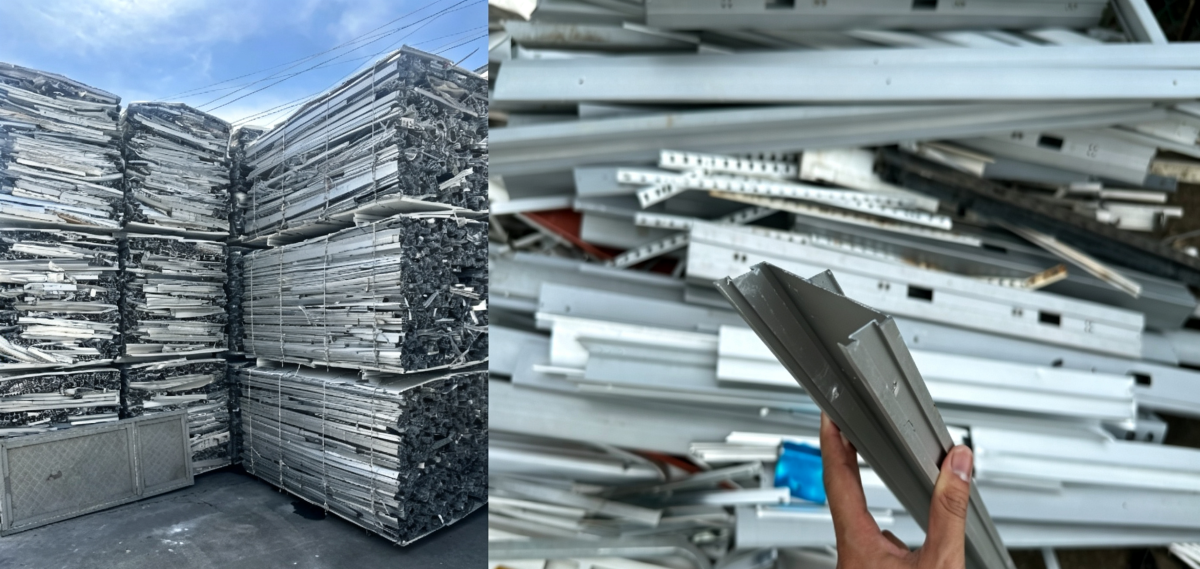
• Extremely high economic value: The production cost of recycled aluminum is only about 5% of that of primary aluminum. Energy consumption and raw material costs have been significantly reduced. The recycling price of waste aluminum (aluminum alloy doors and windows, beverage cans, aluminum wires, aluminum parts of household appliances, automotive aluminum components) remains stable over the long term. The mainstream market quote in 2026 is approximately 17-20 yuan per kilogram, with strong liquidity and quick liquidity. Moreover, aluminum can be recycled infinitely, and its performance hardly deteriorates. After recycling, it can directly return to industrial production without being downgraded for use.
• Outstanding environmental protection value: For every ton of waste aluminum recycled, approximately 20 tons of bauxite can be saved, 95% of energy consumption can be reduced, and about 11 tons of carbon dioxide can be eliminated. This significantly reduces pollution caused by mining and smelting, making it a key material for achieving the "dual carbon" goals.
• Industrial and resource value: Scrap aluminum is known as "urban aluminum ore". The recycling industry chain is mature. After sorting, smelting, and purification, it can be used in various fields such as construction, transportation, packaging, and electronics. This not only ensures low-cost materials for the manufacturing industry but also alleviates the pressure on primary mineral resources. At the same time, it creates job opportunities in recycling, processing, and operation maintenance.
From the precious and rare metal that is more valuable than gold, to the recyclable and sustainable basic material, aluminium, with its unique material advantages and full life cycle value, has become an indispensable core material for modern industry and green development.
Mainland phone: 13049844111
Email address: 13049844111@163.com
Hong Kong phone: 852-52664790. Liangji Recycling Co., Ltd. looks forward to your call and is eager to jointly embark on a new chapter where environmental protection and value coexist!
The Lianji recycling system has obtained certifications through international standards such as quality management (ISO 9001), environmental management (ISO 14001), and information security management (ISO 27001). It is safe, formal, and professional - we look forward to your call and are eager to jointly embark on a new chapter where environmental protection and value coexist!