Inventory Recovery in Hong Kong: From Comprehensive Inventory Clearance to Clothing Circularity, Unlocking New Value in Circular Economy
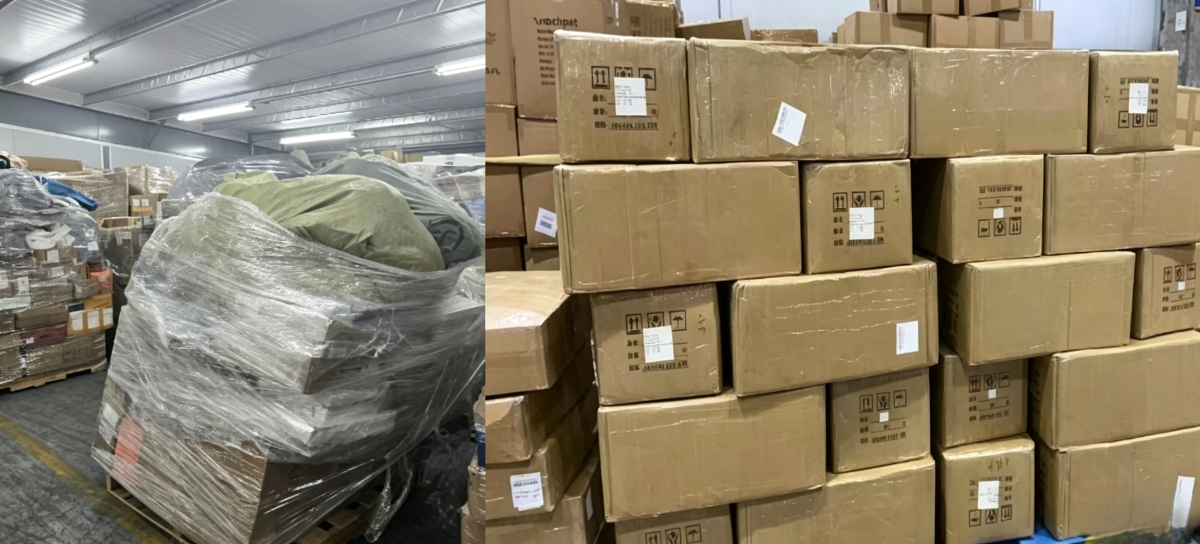
In the highly competitive and space-constrained Hong Kong, inventory accumulation is never just a commercial issue. As a global trade and business hub, the annual inventory accumulation caused by market fluctuations and consumer iterations in Hong Kong not only occupies expensive storage space and hinders the capital turnover of enterprises, but also faces the risk of transforming from "assets" to "environmental liabilities" under strict environmental regulations. From electronic components, plastic hardware to massive clothing fabrics, how to achieve efficient, compliant and environmentally friendly recycling processing to restore the value of idle inventory has become a key issue for Hong Kong enterprises and society's sustainable development.
1. Comprehensive Inventory Accumulation: The Common Challenges and Breakthrough Needs of Hong Kong Enterprises
Hong Kong's unique business ecosystem makes the pain point of inventory accumulation particularly prominent. Intense market competition, rapid changing consumer demands, combined with global economic fluctuations, have led to the continuous accumulation of various inventories such as electronic components, plastic hardware, ready-to-wear fabrics, and household items. The annual economic losses caused by these accumulated inventories amount to several billion Hong Kong dollars. For enterprises, these accumulated inventories not only mean capital entrapment but also entail the high storage costs in core storage areas such as Yuen Long and Tsing Yi, making the piled-up inventory a heavy burden. More seriously, Hong Kong's "Waste Disposal Ordinance" and "Product Environmental Responsibility Ordinance" impose strict requirements on waste disposal, and random landfilling and incineration not only pollute the environment but also may face hefty fines. Compliance processing has become an essential option for enterprises.
Different types of inventories require precise matching recycling paths due to their varying value attributes and environmental risks. The core value of electronic component inventory lies in recyclability. Formal recycling institutions will first test the functional integrity, and high-quality components can be resold to downstream assembly factories, with a recovery price of 40%-60% of the original price. Faulty components are dismantled to extract gold, silver, etc., to avoid resource waste. For plastic and metal components, the focus is on "cost reduction + environmental protection". Plastic pieces are crushed for production of low-end products, and metal pieces are melted and purified for re-molding. Enterprises do not need to bear high disposal costs and can also receive a weight-based recovery income. For ready-to-wear, fabric and other textile inventories, in addition to compliance requirements, brand protection also needs to be considered. During the recycling process, channels need to be avoided through marking, logo removal, etc., to ensure channel risks. Good fabrics can be resold to small garment factories, while damaged pieces enter the environmental recycling system. This "categorized approach" recycling logic not only ensures enterprise benefits but also aligns with Hong Kong's environmental and compliance requirements.
2. Environmental Recycling of Clothing Inventory: From "End-of-Life Processing" to "Closed-loop Circulation" Innovation
Among various inventories, the environmental recycling of clothing and textile inventories is the most representative and can best demonstrate the depth value of circular economy. Hong Kong's clothing inventory covers two core sources: overproduction and overstocked end-of-season goods, defective samples from the industrial sector, and idle clothing from the consumer sector. If these inventories are treated by traditional landfill or incineration methods, it will cause serious environmental burdens - synthetic fibers are difficult to degrade and will release microplastics into the soil and water sources, while incineration will produce harmful gases threatening air quality. In recent years, Hong Kong's technological innovation and model exploration in clothing environmental recycling are driving the industry to transform from "end-of-life processing" to "full life cycle closed-loop".
Professional sorting is the basic link of clothing recycling and the key to achieving "full utilization of resources". Recycled clothing will enter professional sorting centers, where it is classified in detail based on material (cotton, linen, synthetic fibers, wool, etc.), condition (new, nearly new, slightly damaged, etc.), and category through a combination of manual and automated methods, laying the foundation for subsequent step-by-step utilization. On this basis, Hong Kong has established a multi-level recycling and reuse system: for garments that are in good condition and still fashionable, after professional cleaning and disinfection, they are circulated through compliant second-hand markets or donated to charities, achieving the value of "re-wearing"; for slightly damaged or outdated clothes, through creative transformation, they become household items and fashion accessories, giving them new practical attributes; and for cotton and wool garments that cannot be worn directly, they enter the physical recycling channel, through loosening and spinning processes, transformed into recycled yarn, used to produce secondary products such as cleaning cloths and industrial fabrics.
More groundbreaking is the industrial application of closed-loop recycling technology. The "Billie System" jointly developed by Hong Kong Novetex Textile Co., Ltd. and Hong Kong Textile and Garment Research and Innovation Centre (HKRITA) provides a benchmark solution for textile inventory handling. This patented system focuses on physical recycling, operates without water treatment throughout the process, does not produce chemical waste, and has an almost 100% automated process that can convert textile scraps and inventory fabrics into high-quality recycled yarn, which can be mixed with virgin fibers for the production of new textiles. Over the past five years, this system has successfully converted 600 kilograms of textile waste into 800 kilograms of yarn, and has collaborated with brands such as MUJI, processing recycled old clothes into recycled yarn, further applied to the production of trial room signs, forming a complete closed loop of "recycling - regeneration - reuse". This model not only solves the problem of inventory handling, but also reduces reliance on virgin cotton, petroleum, etc., demonstrating a win-win situation of environmental protection and commercial value.
Mainland phone: 13049844111
Email address: 13049844111@163.com
Hong Kong phone: 852-52664790, Liangji Recycling and Reuse Co., Ltd. Looking forward to your call, let's jointly embark on a new chapter of environmental protection and value coexistence!
The Lianji recycling system has obtained certifications through international standards such as quality management (ISO 9001), environmental management (ISO 14001), and information security management (ISO 27001). It is safe, formal, and professional - we look forward to your call and are eager to jointly embark on a new chapter where environmental protection and value coexist!