Electronic Waste "Invades" Hong Kong: New Industry Development Trends Revealed by Popular Recycling Categories in 2026
As a globally renowned international trading port, Hong Kong has long served as a core hub for the transshipment and trade of electronic products. In recent years, the pace of global electronic product iteration has accelerated, coupled with increasingly stringent environmental regulations in various countries and regions, leading to a continuous accumulation of large quantities of discarded electronic equipment, unsold inventory, and obsolete server room hardware in Hong Kong.
Electronic waste, once overlooked, has now become a core issue in Hong Kong's environmental governance and resource recycling sectors. Based on real-world data on the Hong Kong recycling market in the first half of 2026, this article will analyze the new development pattern and upgrading trends of Hong Kong's electronic waste recycling industry through the changes in current mainstream recycling categories.
I. The Continued Rise in Electronic Waste Stockpiling: The Core Causes of Hong Kong's Waste Stockpiling Craze
Hong Kong generates a stable amount of discarded electrical and electronic products annually. Coupled with the increase from cross-border trade delays, enterprise equipment obsolescence, and unsold market inventory, the volume of electronic waste awaiting compliant disposal in Hong Kong has been rising year by year. The current state of the industry stems from the combined efforts of policy, industry, and market forces:
At the policy level, global environmental regulations are tightening, leading to a significant contraction in the previously inefficient channels for exporting electronic waste. Under the dual regulations of international conventions and Hong Kong's local environmental ordinances, electronic waste can no longer be disposed of across borders at will. Simultaneously, Hong Kong strictly prohibits the landfill disposal of electronic waste, and penalties for illegal stockpiling and indiscriminate dumping are continuously increasing, forcing companies and traders to shift to compliant return-to-Hong Kong recycling channels.
At the industry level, digitalization and computing power upgrades are driving concentrated hardware iterations and updates. Hong Kong has a high concentration of data centers, telecommunications operators, financial offices, and business parks. With the comprehensive upgrade of high-speed networks and computing equipment, older servers, optical modules, switches, and communication accessories are being decommissioned in large quantities. Meanwhile, set-top boxes and smart wearable devices left over from cross-border e-commerce and electronics exhibitions, due to non-compliance with specifications and sluggish market sales, have accumulated as a stable source of large-scale return-to-Hong Kong goods.
At the market level, the replacement frequency of consumer digital products has increased significantly. Hong Kong residents are rapidly upgrading their mobile phones, tablets, small appliances, and smart devices, generating a massive amount of household electronic waste annually. The centralized collection of scattered household waste has further expanded the overall stock of electronic waste in Hong Kong.
II. The Iteration of Popular Recycling Categories in Hong Kong in 2026, Reshaping the Industry's Value Logic
Compared to previous years, the structure of recycling categories in Hong Kong underwent a disruptive change in 2026. The industry has completely moved away from the extensive recycling model dominated by old large appliances; high-precision, high-value-added electronic materials have become the core recycling targets. The five most popular recycling categories this year have clear characteristics and leading volume:
1. Retired Servers and Communication Network Equipment
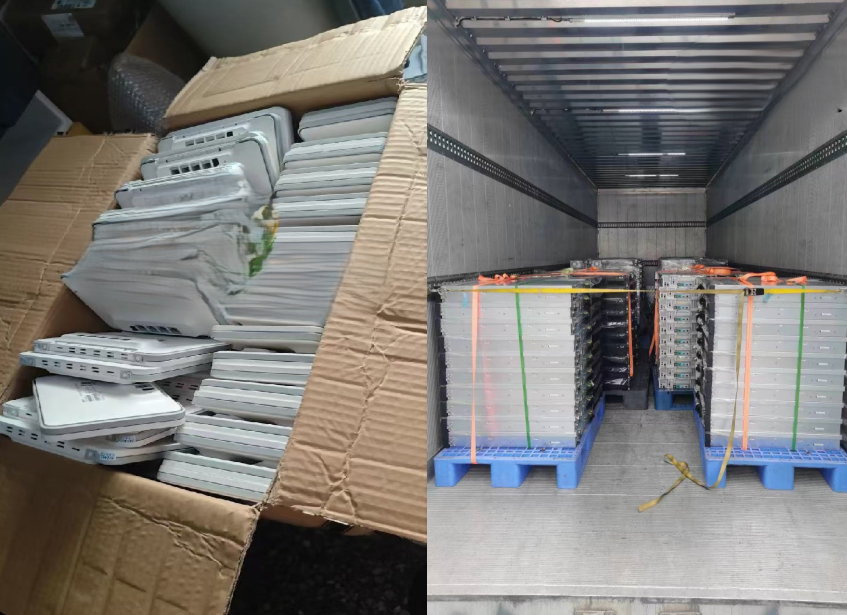
This category topped the list in terms of volume for recycling in Hong Kong in 2026. Major IDC data centers, government and enterprise units, and internet companies in Hong Kong completed concentrated upgrades to computing power and networks, resulting in the large-scale decommissioning of core equipment such as rack-mounted servers, switches, firewalls, 800G optical modules, and fiber optic connectors. These precision electronic hardware components, featuring gold-plated contacts, rare chips, and high-purity metals, possess extremely high resource recovery value after dismantling, making them the fastest-growing core category in the market over the past two years.
2. PCB Circuit Boards and Gold-Plated Electronic Components
As a high-value, essential category in the industry, this includes various equipment motherboards, flexible circuit boards, salvaged chips, gold-plated connectors, and component pins. Circuit boards are rich in rare and precious metals such as gold, palladium, and nickel, and their recycling efficiency and economic benefits far surpass those of traditional mining. Factory scraps and salvaged components from discarded equipment continuously enter the market, consistently occupying a core share of the high-end electronics recycling market.
3. Cross-Border Unsold Digital Inventory Equipment
Leveraging Hong Kong's entrepot trade attributes, a large number of customized set-top boxes, smartwatches, Bluetooth headsets, and home smart terminals are exported but cannot be sold due to frequency band, specification, and market compatibility issues, resulting in long-term stockpiling in bonded warehouses. This type of inventory is mostly returned to Hong Kong in full containers for compliant disposal. Equipment in good condition can be recirculated after sorting and testing, while faulty equipment is disassembled to extract core resources such as battery cells and motherboards, maximizing their utilization.
4. Waste Power and Consumer Lithium Batteries
This is a newly emerging and popular category that rose to prominence in 2026, including built-in batteries in digital devices, energy storage batteries, and retired automotive lithium batteries. With the establishment and operation of professional lithium battery resource recovery bases in Hong Kong, standardized dismantling and environmentally friendly refining technologies are becoming increasingly mature. Coupled with the global tight supply and demand of battery raw materials such as lithium, cobalt, and nickel, the recycling value of waste lithium batteries continues to rise, and large-scale compliant return-to-Hong Kong recycling has become the norm in the industry.
5. Old Office and Industrial Electronic Equipment
This is a category with a stable market foundation, mainly consisting of desktop computers, industrial monitors, industrial control equipment, and related accessories from the upgrading and renovation of Hong Kong office buildings and industrial parks. This type of equipment mainly involves the recycling of copper and aluminum casings and ordinary circuit boards. The supply is stable, the market is broad, and it is an important support for small and medium-sized return-to-Hong Kong recycling businesses.
Overall, the value logic of Hong Kong's electronic waste recycling market has undergone a complete transformation, upgrading from the past "pricing by weight and haphazard recycling" to a refined operational model of "material-based, precise sorting, and emphasis on added value."
III. Four New Development Trends in Hong Kong's Electronic Recycling Industry Behind Category Iteration
The structural shift in popular recyclable categories is not simply a matter of market fluctuations, but rather an industry transformation jointly driven by upgraded Hong Kong environmental policies, iterative recycling technologies, and industrial synergy within the Greater Bay Area. Four major development trends have already taken shape:
Trend 1: Upgraded Disposal Model, Local Processing + Cross-border Return to Hong Kong: A Two-Way Closed Loop Forms
In the past, over 70% of Hong Kong's electronic waste relied on overseas transportation for dismantling, resulting in a haphazard and loosely regulated supply chain. With countries worldwide tightening their solid waste import policies, the single overseas transportation model has become unsustainable.
The industry has established a mature dual-track disposal system: low-value general waste household appliances and consumer electronic waste are disposed of locally through Hong Kong's EcoPark, achieving standardized dismantling and processing; high-precision, high-value industrial electronic materials are processed through compliant Hong Kong return procedures, connecting with the mature deep-processing capacity of the Guangdong-Hong Kong-Macao Greater Bay Area for refined extraction and resource regeneration, constructing an efficient, compliant, and green two-way circulation system.
Trend Two: Specialized Differentiation in the Industry, with Professional and Customized Disposal Becoming Standard Practices
Industry specialization continues to refine, and homogeneous mixed collection models are gradually being phased out. Leading compliant institutions focus on high-precision waste such as servers, lithium batteries, and gold-plated precision electronics, providing customized services such as professional sorting, precision testing, and data confidentiality destruction, precisely meeting the high-standard disposal needs of financial institutions, listed companies, and data centers. Small and medium-sized enterprises focus on basic categories such as consumer electronics, ordinary cables, and conventional electronic waste, forming a basic pattern of tiered operation and professional development within the industry.
Trend 3: Technology Empowers Industrial Upgrading, Transforming Electronic Waste into "Urban Mines"
Leveraging the technological R&D advantages of Hong Kong universities and research institutions, technologies such as precious metal extraction from electronic waste, wet regeneration of lithium batteries, and non-destructive dismantling of precision equipment are continuously being applied. Traditional, highly polluting, and inefficient extensive dismantling methods have been completely eliminated, significantly improving resource recycling rates. What was once discarded electronic waste is now becoming a high-quality industrial raw material that can be stably recycled and reused, fully realizing its resource value.
Trend 4: Deep Integration within the Greater Bay Area, Building a Cross-Border Integrated Green Industrial Chain
Relying on the collaborative development advantages of the Guangdong-Hong Kong-Macao Greater Bay Area, Hong Kong fully leverages its role as an international port hub, responsible for the global collection, compliant sorting, and standardized customs declaration of electronic waste; mainland cities in the Greater Bay Area undertake the downstream capacity for deep dismantling, material purification, and recycling. With the collaborative empowerment of customs and environmental policies in both places, the cross-border electronic waste flow process has become standardized and regulated, fully integrating the entire industrial chain from "recycling-sorting-return-deep processing-reuse."
Mainland China Phone: 13049844111
Email Address: 13049844111@163.com
Hong Kong Phone: 852-52664790. Leung Kee Recycling Limited looks forward to your call, let's jointly open a new chapter of environmental protection and value!