A New Milestone in Waste-to-Energy Conversion: I·PARK1 Pilot Operation Empowers Compliant Disposal of Bonded Waste in the Greater Bay Area
As industrial collaboration in the Guangdong-Hong Kong-Macao Greater Bay Area continues to deepen, processing trade enterprises face increasingly stringent policy and environmental requirements regarding the compliant disposal of bonded materials. Against this backdrop, the pilot operation of Hong Kong's first modern urban solid waste-to-energy facility—the Integrated Waste Management Facility Phase I (I·PARK1)—has opened a new channel for the disposal of bonded waste from processing trade in the Greater Bay Area, marking a key milestone in the region's environmental infrastructure development.
I·PARK1: A Technological Breakthrough in Waste-to-Energy Conversion
Located on an artificial island next to Shek Kwu Chau, I·PARK1 employs advanced high-temperature incineration technology, effectively controlling flue gas emissions and decomposing organic pollutants, including dioxins. The facility generates electricity using the heat produced during incineration, meeting its own operational needs and supplying approximately 480 million kilowatt-hours of electricity to the grid annually—enough to power 100,000 households for a year, fully demonstrating the comprehensive benefits of "waste-to-energy conversion."
Regarding operational progress, the first incineration module of I·PARK1 entered its first phase of trial operation in December 2025. The second incineration module began system testing involving incinerated waste in March 2026. Major supporting equipment, such as seawater desalination and wastewater treatment systems, are also undergoing trial operation simultaneously. The third incineration module is expected to enter system testing in the first half of 2026. The entire facility is expected to be fully operational by the end of the year, at which time it will be able to process 3,000 metric tons of municipal solid waste daily, reaching its designed processing capacity.
The Real Need for Waste Disposal in the Greater Bay Area's Processing Trade
Bonded materials for processing trade are under strict customs supervision from the moment they enter the country. According to the "Administrative Measures of the Customs of the People's Republic of China on Processing Trade Scrap Materials, Residual Materials, Defective Products, By-products and Disaster-Stricken Bonded Goods," scrap materials, residual materials, defective products, by-products, and disaster-stricken bonded goods generated after processing bonded imported materials are all goods under customs supervision and may not be sold or used for other purposes without customs permission.
In 2025, the General Administration of Customs, in conjunction with several other departments, issued Announcement No. 83, clarifying that scraps, defective products, and by-products generated from the processing of four types of goods and their semi-finished products under the special handbook (account book) cannot be sold domestically and must be re-exported or destroyed according to current regulations. This regulatory requirement further increased the demand for compliant disposal channels for processing trade enterprises.
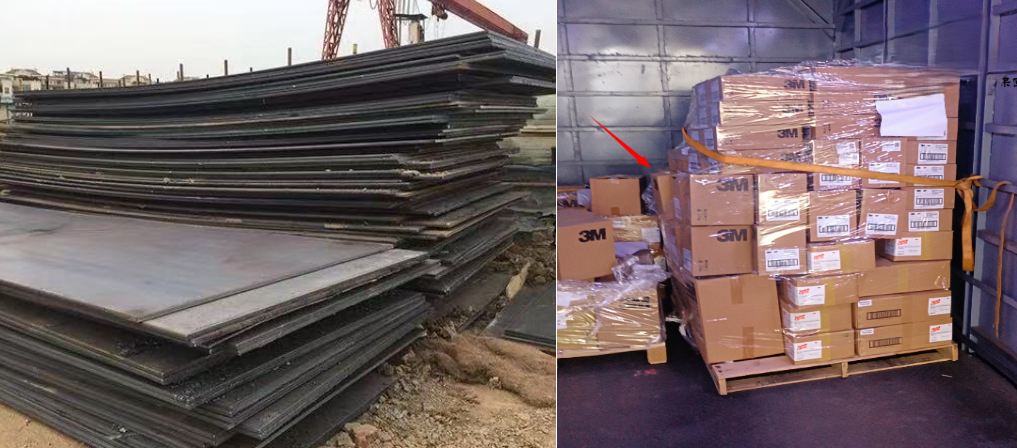
According to regulations, bonded goods that processing trade enterprises cannot sell domestically or return due to unforeseen circumstances must be entrusted to legally qualified units for destruction. Customs will process the verification procedures based on relevant documents and the receiving receipts and disposal certificates issued by the disposal unit. As one of the most active processing trade regions in China, the Greater Bay Area has an urgent need for waste disposal facilities with environmental compliance capabilities and that meet regulatory requirements.
I·PARK1 Empowers Regional Waste Disposal Capacity Improvement
The operation of I·PARK1 has effectively improved the end-of-pipe treatment capacity of bonded waste in the Greater Bay Area. Utilizing modern incineration technology for high-temperature harmless treatment, it can meet the environmental emission standards for different types of waste. Compared to traditional landfill disposal methods, waste-to-energy technology can effectively replace aversive landfills, is pollution-free, and helps reduce greenhouse gas emissions.
As a separate customs territory, Hong Kong has a unique advantage in accepting bonded waste from the mainland and issuing compliant destruction certificates. According to customs regulations, after processing trade enterprises entrust legally qualified units to carry out destruction, they must submit a destruction declaration form, a receipt issued by the disposal unit, and a destruction certificate to customs for verification. Licensed environmental recycling organizations in Hong Kong can simultaneously meet the legal and regulatory requirements of both places when fulfilling the above procedures. Furthermore, in accordance with Hong Kong's new licensing control measures for the import and export of electrical and electronic waste implemented from January 1, 2025, the disposal of related waste in Hong Kong must also comply with local environmental licensing regulations, further enhancing compliance throughout the entire process.
Operationally, enterprises in the Greater Bay Area can complete all stages of the environmental destruction of bonded materials returned to Hong Kong through a standardized process of "material inventory—customs declaration and approval—cross-border transportation—Hong Kong port customs clearance and warehousing—on-site environmental destruction—issuance of destruction certificate—customs verification and closure." Material inventory must be categorized and filed according to categories such as electronic components, metal components, defective products, obsolete materials, and hazardous waste; the transportation process utilizes customs-supervised vehicles with full GPS tracking to ensure goods are not tampered with or leaked; the disposal process is conducted by a licensed institution with full video recording and archiving to ensure irreversible and traceable disposal.
Building a Green Future of "Zero Waste Landfill"
The Hong Kong SAR Government has clearly stated its long-term goal of achieving "zero waste landfill" for municipal solid waste by 2035. Significant progress has been made in waste reduction and recycling in recent years—the average daily disposal of municipal solid waste has continuously decreased from 11,358 metric tons in 2021 to 10,326 metric tons in 2025, and the overall recycling rate has increased from 28% in 2020 to 34%.
Building on the successful trial operation of I·PARK1, the Hong Kong SAR Government plans to apply to the Legislative Council for funding by 2026 to construct a second waste-to-energy facility, I·PARK2, located at the central ash lake of the former Lung Kwu Tan Power Station in Tuen Mun, with a designed daily processing capacity of 6,000 metric tons. Together, the two facilities will be able to process 9,000 metric tons of municipal solid waste daily. At that time, the landfill will be able to gradually cease accepting municipal solid waste. Coupled with the ongoing efforts in waste reduction, recycling, and resource recycling, Hong Kong is steadily moving towards its goal of achieving "zero waste landfill" and carbon neutrality by 2035.
Through the construction of the I·PARK series of waste-to-energy facilities, Hong Kong is building a green disposal capacity hub with regional influence. For processing trade enterprises in the Greater Bay Area, this is not only a hardware guarantee for waste disposal but also a crucial support for reducing compliance risks and enhancing green competitiveness. Under the increasingly close environmental cooperation framework between Hong Kong and the Mainland, the construction of waste-to-energy facilities continues to inject new impetus into the green and compliant development of regional industries.
Mainland China Phone: 13049844111
Email Address: 13049844111@163.com
Hong Kong Phone: 852-52664790. Liang Kee Recycling Limited looks forward to your call, let's jointly open a new chapter of environmental protection and value!