Guide for Recycling and Processing of Gold-containing Electronic Materials | Both good and bad materials can be recycled · Professional guarantee with ISO certification
In today's era where electronic products are constantly undergoing updates and improvements, a large amount of gold-containing electronic materials are being discarded from production lines, inventory warehouses, and scrapped equipment. Among these materials regarded as "waste", the content of precious metals such as gold, palladium, and silver is often much higher than that in natural gold mines. They are not discarded industrial waste but rather "urban mines" that need to be exploited urgently.
1. What are the precious metal electronic materials? Where do their values lie?
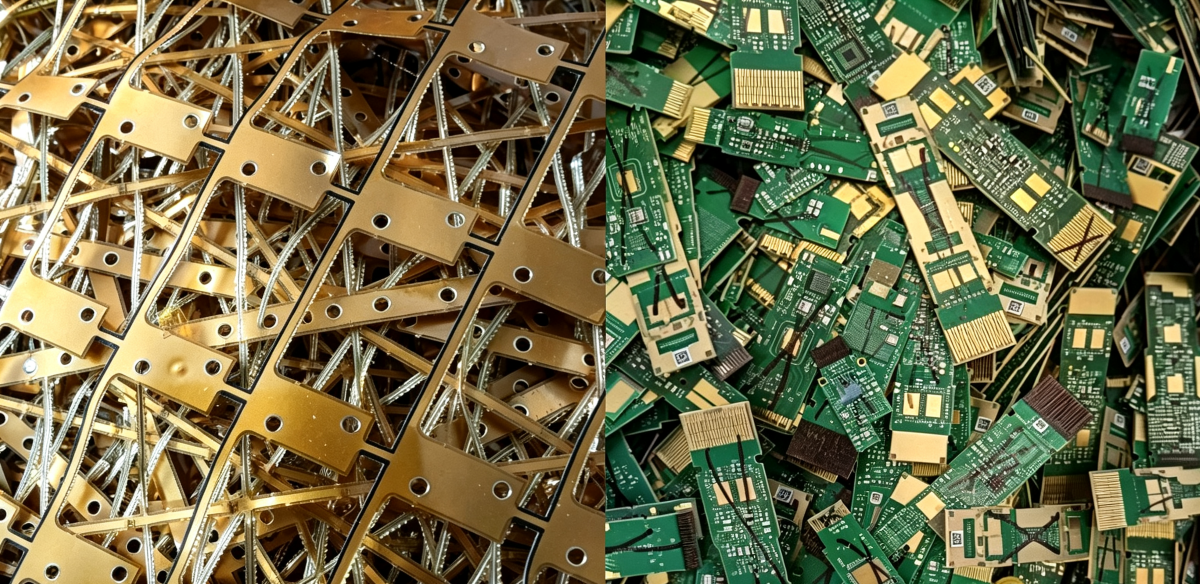
Gold-containing electronic materials refer to the electronic components and scraps produced or eliminated during the electronic manufacturing process, which have gold plating on their surfaces or inside. Typical examples include gold-plated IC chips, CPU pins, gold-plated connectors, gold fingers, FPC flexible circuit boards, gold-containing substrates, and gold-containing circuit boards, etc.
The core value of this type of material lies in the gold. The gold coating on electronic materials typically contains hundreds of grams of gold per ton, far exceeding the average grade of natural gold mines (about 5 grams per ton), and often comes with recyclable metals such as silver, palladium, and copper. Take the main board of a mobile phone as an example, 200-300 grams of gold can be extracted from 1 ton; 500-800 grams of gold can be extracted from 1 ton of CPU pins. Even common waste materials like FPC flexible circuit boards have a gold content ranging from 0.5% to 3%, which has significant recycling value.
For electronic manufacturing enterprises, PCB factories, communication equipment manufacturers, and cross-border e-commerce companies, these gold-plated scraps, scrapped components, stagnant inventory materials, and leftover substrates, regardless of their appearance condition or whether they can still be used, all contain considerable recycling value.
II. Compliance Recycling: It is both a necessity and a responsibility.
Electronic materials containing gold are classified as strictly regulated waste. If they are discarded carelessly or handled by unqualified vendors, the risks are extremely high. During illegal dismantling processes, actions such as using strong acids for cleaning and burning plastics can release toxic substances, polluting the soil and water sources. In Hong Kong, according to the "Waste Disposal Ordinance", unauthorized disposal of electronic waste can result in a maximum fine of 2 million Hong Kong dollars and a 6-month prison sentence; as of January 1, 2025, any import or export of electrical and electronic waste must obtain prior permission from the Environmental Protection Department.
The value of compliant recycling goes beyond merely avoiding risks; it lies in "transforming waste into treasure". The energy consumption for recovering precious metals from electronic waste is only 1/10 of that in the extraction of primary minerals, and carbon emissions can be reduced by over 80%. For enterprises, handing over gold-containing electronic materials to a formal channel for processing not only enables the monetization of accumulated assets but also provides compliant evidence for ESG reporting and green supply chain management.
III. Why is Hong Kong the preferred location for the recycling of gold-containing electronic materials?
Hong Kong has unique advantages in the recycling of gold-containing electronic materials:
· Zero-tariff free port: Import and export of gold waste materials do not require payment of value-added tax or tariffs, avoiding the complicated approval process for the transfer of hazardous waste from the mainland.
· Legal licensed operation: Enterprises holding the "Waste Disposal License" issued by the Environmental Protection Agency can legally engage in waste recycling, with the entire process being transparent and traceable.
· Advanced technical capabilities: Possessing core technologies such as XRF rapid detection, auriferous test fusion method, ICP spectral analysis, electrolytic purification, etc. The recovery rate of precious metals can reach over 95%, and the purity can reach over 99.95%.
· Real-time transparent pricing: Through precise detection equipment, the content of precious metals in the materials is accurately evaluated, and a fair price is given based on the current international gold price.
· Logistics convenience: Located close to the core manufacturing area of the Pearl River Delta, the established cross-border logistics route between China and Hong Kong enables door-to-door pickup throughout the region and rapid customs clearance.
IV. Select an ISO-certified recycling company to ensure safety and security
In the process of recovering gold-containing electronic materials, choosing a professional recycling company with international authoritative certifications is crucial for enterprises to avoid risks, ensure safety and guarantee quality. ISO system certification represents professional management level and reliable service capabilities.
The following three certifications are particularly important:
· ISO 9001 Quality Management System: Ensures the entire process from material receipt to processing and delivery is standardized, maintaining stable and predictable service quality, and ensuring the accuracy and compliance of reports and documents.
· ISO 14001 Environmental Management System: Adopting processes without secondary pollution, with compliant disposal of waste gas, wastewater and waste residue, helping customers fulfill their ESG responsibilities.
· ISO 27001 Information Security Management System: For classified storage materials containing valuable electronic components, we provide a professional data destruction system to ensure that the data is completely erased and to prevent the leakage of business secrets.
Recyclers with the above certifications usually also hold the "Waste Disposal License" issued by the Hong Kong Environmental Protection Department, and have physical processing sites. They are capable of efficiently undertaking the entire process from on-site collection, classification assessment, precise dismantling to precious metal purification.
Take Liangji Recycling Co., Ltd. as an example. This company holds all three of the aforementioned ISO certifications and the Hong Kong "Waste Disposal License". It has a professional processing site of over 1,800 square meters in Yuen Long, New Territories, as well as an environmental protection processing base of 25,000 square feet and a storage facility of 40,000 square feet. It can provide one-stop recycling and processing services for various gold-containing electronic materials (regardless of their quality), and issue compliant certification documents.
V. Professional Recycling Process
A standard process for the recycling and treatment of gold-containing electronic materials typically involves the following steps:
Material assessment and classification
Conduct on-site or remote assessment of gold-containing electronic materials, classify and distinguish different types such as gold-plated ICs, CPU pins, gold contacts, FPC boards, etc., and remove obvious non-metallic impurities.
2. Precision Inspection and Quotation
The components are initially screened using an XRF rapid detection instrument. If necessary, the samples are sent to the laboratory for precise ICP analysis to determine key indicators such as gold content. Based on the real-time international precious metal market conditions on the same day, a fair price is provided.
3. Compliance of Disposal and Storage
Arrange a professional logistics team to pick up the goods at your location, complete the declaration for removal from the port or the local clearance procedures, and have the materials sent to a processing factory that holds a "Waste Disposal License".
4. Precise disassembly and extraction of precious metals
In the compliant factory, the materials are classified and disassembled, separating the non-metallic impurities from the gold-plated components. An environmentally friendly gold removal process is used to dissolve the gold layer. Through techniques such as chemical precipitation and electrolytic refining, the crude gold is extracted and further purified to high-purity gold ingots. For materials containing storage media, physical-level data erasure is carried out simultaneously.
5. Issue Certificates and Reports
The entire process is recorded with video and photos for evidence. After completion, the following certificate documents such as the "Environmental Protection Recycling Disposal Report" and the "Destruction Witness Report" will be provided, which can be used for customs clearance, tax compliance and ESG disclosure.
Recycling of gold-containing electronic materials, regardless of the quality of the materials or their usability, should be entrusted to compliant and professional institutions for standardized processing. Whether it is the gold-coated scraps from the production line, the scrapped gold components, or the accumulated and stagnant gold-containing materials in inventory, through a one-stop service provider holding the Hong Kong "Waste Disposal License", having passed the ISO three international certifications, and providing on-site assessment, real-time quotations, professional handling, and issuing compliant certificates, it is the foundation for ensuring a safe, worry-free, and guaranteed recycling process.
In today's era where resource recycling and green development have become the mainstream, the compliant recycling of gold-containing electronic materials is not only a safeguard of commercial value, but also an assumption of social and environmental responsibility.
Mainland phone: 13049844111
Email address: 13049844111@163.com
Hong Kong phone: 852-52664790. Liangji Recycling Co., Ltd. looks forward to your call and is eager to jointly embark on a new chapter where environmental protection and value coexist!
The "Liangji" recycling program has obtained certifications through international standards such as quality management (ISO 9001), environmental management (ISO 14001), and information security management (ISO 27001). It is safe, formal, and professional - we look forward to your call to jointly embark on a new chapter where environmental protection and value coexist!