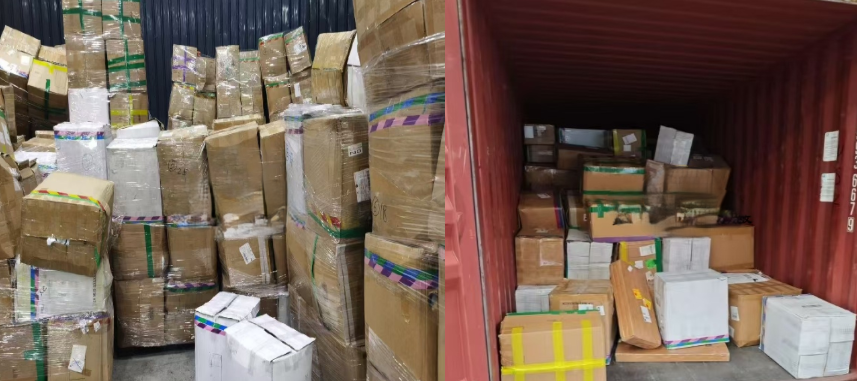
Do the goods returned from Hong Kong need to go through customs clearance first before being recycled? Can the recycling company handle the customs clearance for the returned goods from Hong Kong?
In the scenario of environmental recycling of goods withdrawn from Hong Kong, the sequence of customs clearance and recycling, as well as the feasibility of recycling companies handling customs clearance on behalf of enterprises, are the core compliance issues that enterprises frequently focus on. By combining the Hong Kong customs regulatory rules, environmental recycling industry norms, and cross-border logistics requirements, this article objectively explains the relevant rules and operational logic.
1. Do the goods that are being withdrawn from Hong Kong need to go through customs clearance first before being recycled?
Conclusion: The import clearance procedures for goods in Hong Kong must be completed first, and only after the goods are released in compliance with regulations can the environmental recycling operations be carried out.
Customs clearance is the legal prerequisite for the entry of goods.
As a free port, Hong Kong exempts most goods from customs duties. However, all inbound goods (including those returning to the port) must be declared and cleared in accordance with the law. They need to go through customs review, inspection (such as random checks), and the release process to obtain legal entry qualifications. Goods that have not been cleared are subject to supervision and have restricted ownership and disposal rights. No entity (including recycling institutions) is allowed to extract, transfer, or handle them without authorization.
2. The sequence logic of customs clearance and recycling
• Standard procedure: Depart from the mainland/abroad and return to Hong Kong → Arrive in Hong Kong and collect the documents → Conduct import customs clearance and declaration → Obtain customs clearance → Extract the goods → Implement environmental protection recycling/destruction.
• Key reason: After customs clearance is completed, the goods are no longer under customs supervision. At this point, the recycling company can legally store, sort, dismantle or destroy the goods. If the uncustomized goods are directly recycled, it would be considered as illegal disposal of regulated goods, and the company may face penalties such as seizure of goods by customs and fines.
3. Special Circumstances Explanation
The "direct return" (where the goods are not released upon arrival at the port and are directly returned to the overseas country with approval) does not require subsequent recovery and customs clearance. However, this mode is applicable only to scenarios where the goods do not enter the country and are directly returned, and it is unrelated to the "return for recycling at the port" (where the goods are processed after entering the country).
2. Can the recycling company handle the clearance procedures for returning to Hong Kong?
Conclusion: Hong Kong-based environmental protection recycling companies with compliance qualifications and business capabilities can assist or handle the relevant customs clearance procedures for returning to Hong Kong.
The prerequisite conditions for handling customs clearance
The recycling company must meet the following conditions simultaneously in order to be eligible to handle the procedures in compliance:
Possessing environmental compliance certificates such as the Hong Kong waste disposal license and WEEE recycling qualification, and having the qualification for recycling and processing returned goods from Hong Kong.
• Possessing the qualifications for customs declaration in Hong Kong or establishing a fixed cooperation with a compliant customs agency enables connection to the customs declaration system;
Be familiar with the declaration rules for goods returning to the port (such as the declaration of trade method as "Returned Goods", the filing of reasons for return, etc.).
2. Scope of the agency customs clearance service
Regular recycling companies handle customs clearance, and usually cover the following steps:
• Assist in preparing customs clearance documents: bills of lading, packing lists, invoices, return agreements, recycling qualification certificates, etc.
Act as an agent for submitting import declarations to Hong Kong customs, cooperate with customs inspections, and follow up on the release process;
After the customs clearance is completed, the goods are then picked up and transported to the recycling site, achieving a one-stop closed-loop process of "customs clearance + recycling".
3. Division of Responsibilities and Risks
• Corporate Responsibility: Provide accurate, complete and consistent information regarding the goods (product name, quantity, specifications, reasons for return, etc.), and ensure that the documents are free from any falsehoods.
• Company's responsibility for recycling: Handle compliance declaration procedures, ensure that the process complies with the regulations of the Hong Kong Customs and the Environmental Protection Department, and assume the compliance responsibility for the operational aspects;
Risk Warning: Entrusting customs clearance to unqualified institutions may lead to problems such as incorrect declaration of documents and non-compliance with qualifications, resulting in the goods being detained, fines being imposed, and even damaging the enterprise's credit.
III. Summary of Key Compliance Operating Points
The sequence must not be reversed: First, clear customs, then retrieve the goods. Any unauthorized handling of goods that have not been released is strictly prohibited.
2. Rigorous qualification review: Select a reputable agency that possesses both environmental recycling qualifications and customs clearance agency capabilities. Verify the license and qualification documents.
3. Documents are complete and genuine: Prepare all necessary documents such as the bill of lading, return agreement, and recovery qualification certificate, to ensure consistency of the document information and avoid customs clearance delays;
4. Full compliance and traceability throughout: Records are kept for the entire process of customs clearance, transportation, recycling, and destruction, in accordance with the regulatory requirements of Hong Kong's "Waste Disposal Ordinance" and "WEEE Ordinance".
The handling of goods leaving Hong Kong must strictly follow the regulations of the Hong Kong customs and environmental protection laws. It is necessary to standardize the customs clearance process and select compliant partners to avoid risks and ensure the legality and effectiveness of the recycling.
Mainland phone number: 1304984411
Email address: 13049844111@163.com
Hong Kong Tel: 852-52664790. Liangji Recycling Co., Ltd. is looking forward to your call and is eager to jointly embark on a new chapter where environmental protection and value coexist!
Through international standards certifications such as quality management (ISO 9001), environmental management (ISO 14001), and information security management (ISO 27001), we are safe, formal and professional. Our one-stop service for recycling, reclamation and destruction in Hong Kong is available. - Looking forward to your call and jointly starting a new chapter where environmental protection and value coexist!