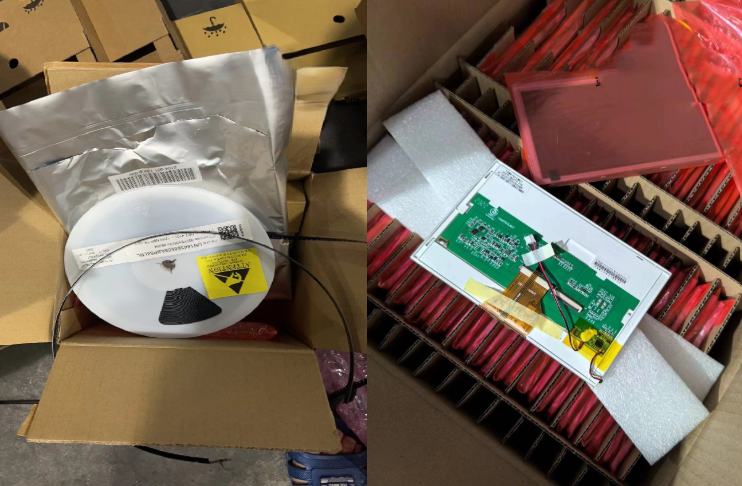
The brand-new and unopened electronic goods have been returned to the port for destruction. Do we need to pay additional import duties and value-added taxes?
I. Core Regulatory Basis
Article 36 of the "Customs Law of the People's Republic of China": If bonded goods are re-exported abroad, no customs duties will be levied; if they are not re-exported but are instead sold domestically, customs duties and import-related value-added taxes will be collected as per regulations.
2. Article 10 of the 111th Order of the General Administration of Customs, "Measures for the Management of Offcuts, Surplus Materials, Defective Products, By-products and Damaged Bonded Goods from Processing Trade": For bonded goods such as remaining materials from processing trade, obsolete finished products, etc., enterprises apply for export clearance upon return. The customs will handle the bond release based on the complete return and overseas disposal certificates, and no additional import-related taxes will be required.
3. The 272nd Order of the General Administration of Customs, "Measures for the Collection of Taxes on Import and Export Goods", clearly states: The export of bonded goods does not constitute a domestic sales activity and does not trigger the tax collection provisions for domestic sales.
The "brand-new sluggish electronic goods" described in this article specifically refer to the finished products of processing trade manual materials, as well as the warehoused and bonded electronic products in the comprehensive bonded zone / bonded logistics center (Type B), which cannot be sold domestically due to order cancellations, poor sales, or brand restrictions. These goods are declared and transported to Hong Kong for environmentally friendly destruction and disposal.
II. Basic Conclusion: For compliant port-to-port destruction, no additional customs duties or value-added taxes need to be paid.
Brand-new and idle electronic products in bonded status, with complete customs filing procedures for the entire process of returning and exporting abroad plus overseas destruction. The goods actually leave the country and complete the destruction in Hong Kong, obtaining the official disposal certificate. No need to pay the original import duties or import-related value-added tax. The specific logic is as follows:
Core regulatory logic for bonded goods: For goods entering the zone/entering the customs declaration form from abroad, all taxes are temporarily deferred. Only when the goods remain within the territory and flow into the domestic market (for domestic sales), do they need to be declared for tax refund. Goods returned to Hong Kong are considered as re-export, and as the goods permanently leave the customs supervision area of the mainland, there is no circulation within the territory and do not meet the tax collection conditions.
2. The process of dismantling and destroying in Hong Kong is classified as "disposal of outbound保税 goods", which is distinct from domestic destruction
◦ Domestic destruction: No residual value, completely lost use value. Tax exemption and cancellation can be processed based on the customs destruction record; if the dismantling results in recyclable materials, the proceeds from the sale must be taxed in accordance with the regulations for scrap materials.
◦ Port Departure and Destruction: The goods are completely exported. The entire process, including the crushing and harmless disposal, is completed in Hong Kong. There is no possibility of any goods flowing back to the mainland. There is no situation of domestic resale for profit, and there is no basis for taxation.
3. Applicable regulatory declaration methods: For processing trade idle finished products, declare "Material Return and Exit from the Country"; for the bonded inventory in the special economic zone, declare "Exit of Zone Goods". Both types of declaration regulatory codes are not associated with the tax collection process for domestic sales.
III. Detailed Explanation of Trading Models
(1) Brand-new, idle electronic finished products/materials under the processing trade manual
Processing procedure: The enterprise submits a statement on stagnant inventory, a return application, an agreement for receiving from the Hong Kong environmental protection destruction agency, and WEEE disposal qualification documents to the competent customs authority. After the customs authority approves, the goods are declared for export and transported to Hong Kong. After the destruction is completed, the Hong Kong destruction certificate, the entire process images, and the weighing sheet are retrieved and submitted to the customs for completing the manual verification and cancellation.
2. Tax determination: There is no domestic transfer of goods throughout the process. No additional customs duties or value-added taxes will be levied, and no interest on deferred taxes will be charged. Only when the enterprise does not re-export and opts for domestic discounted sales, will it be required to pay additional taxes and interest on deferred taxes.
(2) Comprehensive bonded zone, bonded logistics center (Type B), bonded e-commerce / general bonded inventory
1. 1210 bonded e-commerce model for completely stagnant electronic products:
When goods enter the zone for保税 storage and are not for domestic sales, and are returned to Hong Kong for destruction, there is no limit imposed by the 6-month return-free period for such returns. The 6-month policy allowing for the return of goods in their original condition and re-entry into the country for tax-free purposes is applicable only in scenarios where goods are returned from export and re-enter the mainland. It does not apply to the situation where goods are returned from保税 storage for destruction and does not conflict with the situation of goods leaving the zone for destruction. The compliant destruction abroad does not require tax payment.
2. General bonded storage goods (not for cross-border e-commerce):
The goods are only located within the special customs supervision area of the customs. They have not undergone formal import tax payment. The return to Hong Kong for destruction is considered an outbound disposal. The account cancellation can be completed with the overseas destruction certificate, and there is no obligation for tax refund.
(3) Duty-paid imported inventory of general trade (non-bonded goods)
The goods have completed the general trade import process, paid the full amount of customs duties and value-added tax. Due to storage in the domestic warehouse, they have become stagnant. They will then be transported to Hong Kong for destruction.
The exit procedure does not involve duplicate taxation.
2. The imported duties already paid cannot be refunded. There is no concept of "re-payment", and they merely preserve the original tax clearance status.
IV. Special circumstances involving residual value recovery (only for Hong Kong disposal, where precious metals are recovered and the proceeds are obtained)
The brand-new motherboards, chips, and gold-plated electronic materials were all sent back to China for destruction. The Hong Kong disposal agency disassembled and recycled the precious metals such as gold, silver, and copper, and paid the residual value to the enterprises. This situation does not trigger the need for supplementary customs duties from the mainland customs.
The residual income is generated from the dismantling process outside Hong Kong. The main cargo has already been permanently exported and does not fall under the category of domestic scrap materials for sale.
2. The enterprise only needs to truthfully report the retained income from the disposal of assets abroad to the competent customs authority. The customs will not levy import duties or value-added taxes on this overseas income.
3. Boundary Differentiation: If the goods are destroyed within the country and the metal waste is sold, then they will be subject to taxation in accordance with the by-product rules.
V. Circumstances Where Tax Exemption Is Not Granted and Tax Payment Is Required
If any of the following operational flaws occur, the customs will deem the goods as domestic sales and require the full payment of tariffs, value-added taxes, and additional late payment interest:
Only declared for return, the goods did not actually leave the country. They were left behind in the country, where they were dismantled and sold for the disposal of obsolete electronic products.
2. After the goods were delivered to Hong Kong, they were not destroyed and were instead resold on the domestic market. The customs later discovered that there were records of the goods' return to the mainland.
3. Unable to provide a complete Hong Kong destruction certificate (Environmental Protection Agency destruction certificate, full supervision and destruction video footage, disposal institution qualification documents), unable to prove that the goods have been completely destroyed and rendered harmless;
4. False declaration of port discharge and destruction, in reality, the inventory was privately dismantled and sold within the country, without any customs-registered destruction record.
VI. List of Essential Documents for Enterprise Compliance Processing (for Tax Exemption Verification)
Import and export ledger/manifest, inventory list, explanation of goods that are not suitable for domestic sales.
2. Return declaration for exit clearance, and complete set of documents for the entire outbound logistics process;
3. The licensed disposal facilities of the Hong Kong Environmental Protection Department receive the contracts and the WEEE import/export license documents.
4. Hong Kong will issue a formal destruction certificate, a cargo weighing report, and all the video footage of the loading, unloading and crushing process.
5. Settlement documents for the residual value of precious metals (if there is any recovery income).
All the documents must be retained for at least 7 years and should be available for subsequent customs verification and auditing.
VII. Clarification of Common Questions
Question: The brand-new electronic products are in perfect condition. They were simply out of stock and were returned to the port for destruction. Will the customs department consider that the goods still have some use value and demand additional taxes?
Answer: No. The destination of the goods transportation is for professional environmental destruction, not for overseas resale. The customs uses the final disposal certificate as the judgment criterion. As long as a complete destruction and disappearance certificate is provided, regardless of whether the appearance of the goods is intact or not, the goods can be declared tax-free.
2. Question: For the small quantity of scattered and inactive chips and hard drives that are being returned to Hong Kong for destruction, are there any thresholds for value or weight that require supplementary tax payment?
Answer: There are no threshold restrictions. Regardless of whether it is a sample or a full container of goods, as long as the outbound and overseas destruction procedures are completed in full, the tax exemption rules will be uniformly applied.
Hong Kong Tel: 852-52664790. Liangji Recycling and Reuse Co., Ltd. has obtained international certifications such as Quality Management (ISO 9001), Environmental Management (ISO 14001), and Information Security Management (ISO 27001). It is safe, formal and professional. We offer a complete service including recycling, reusing, and destruction of waste in Hong Kong. - Looking forward to your call and jointly starting a new chapter where environmental protection and value coexist!