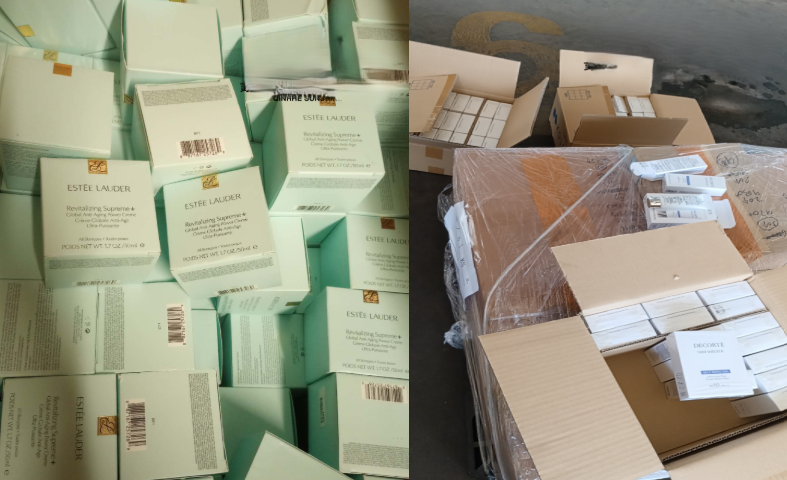
One-stop compliance operation guide for returning and destroying cosmetics inventory from the Shenzhen and Guangzhou bonded zones to Hong Kong for environmental protection purposes
I. Scope of Cosmetic Inventory That Can Be Disposed Of
For cosmetics goods in the comprehensive bonded zones of Shenzhen and Guangzhou, as well as the bonded warehouses for 1210 cross-border e-commerce, the following situations can be handled for return to Hong Kong for environmentally sound destruction:
The product has expired or is close to its expiration date, and thus cannot be sold in the mainland market.
2. Packaging is damaged, liquids are leaking, and the products have deteriorated, failing to meet the standards for display.
3. If the brand initiates a voluntary recall or if the quality inspection fails, it will be prohibited from being sold domestically.
4. The goods have been unsold for a long time, and the enterprise has no plans for domestic sales or repair.
5. The customs and market supervision departments determine the inventory that is prohibited from being sold.
This business exports the goods through the 4561 return goods declaration method. At the same time, it complies with the customs supervision rules of the mainland and the environmental protection regulations of Hong Kong, completing a complete closed-loop for the verification and cancellation of the bonded inventory.
II. Requirements for Declaration of Returned Goods by the Mainland Customs
(1) Required Basic Information
1. Import documents: Original 1210 import customs declaration form, invoice, packing list, return agreement;
2. Business Documents: Authorization letter from domestic e-commerce enterprises, inventory status statement (indicating reasons such as expiration, slow sales, or recall);
3. Disposal of documents: Qualifications of the Hong Kong compliance destruction agency, destruction commissioning contract;
4. Proof of goods: Detailed list of goods, real photos and videos of the products;
5. Supplementary information for special goods: For perfumes, hair dye, and spray products, detailed ingredient descriptions must be provided.
(2) Complete Declaration Operating Procedure
The enterprise submits a complete set of documents to the customs of the bonded area to apply for the return of goods.
2. Make a single-window declaration for export, fill in the supervision method as 4561, and link it to the original import customs declaration form.
3. The customs will check the shipping documents and conduct on-site inspections as needed. Once the inspection is confirmed to be error-free, the goods will be released.
4. The goods are transported across borders and then delivered to the compliant disposal site in Hong Kong.
5. The goods have been completely destroyed in an environmentally safe manner, and all the operation processes have been recorded for future reference.
6. Official destruction certificate issued by the licensed institutions in Hong Kong;
7. The enterprise shall return the destruction certificate to the customs and complete the verification and cancellation of the bonded account within 15 working days.
(III) Tax and Fee Explanation
1210 duty-free cosmetics were returned and destroyed under 4561. The goods did not enter the domestic circulation, so there is no need to pay additional tariffs, value-added taxes, or consumption taxes. Only operation costs such as customs declaration, transportation, and Hong Kong destruction will be incurred.
III. Compliance Regulations for Environmental Destruction in Hong Kong
Cosmetics contain ingredients such as alcohol, chemical preservatives, and pigments. They fall under the category of controlled chemical waste in Hong Kong. The disposal process is regulated by the Environmental Protection Department and is carried out in accordance with the "Waste Disposal Ordinance":
Regulatory qualifications of the disposal institution: It is mandatory to hold a chemical waste collection and disposal license issued by the Hong Kong Environmental Protection Department. Disposal without such qualifications is an illegal act, and the enterprise will face heavy fines and even criminal liability.
2. Pre-arrival declaration: Before a large quantity of cosmetics arrives in Hong Kong, the disposal agency is required to report the product information, transportation and disposal plan to the Environmental Protection Department. Only after approval can the goods be unloaded.
3. Classification and Destruction Standards
• Shampoo, facial masks: Unpack the packaging, degrade the cream form, and recycle plastic and glass packaging separately;
• Makeup powders: Crushed under high pressure to the point of irreversibility, to prevent any further release into the market;
• Perfume, high-pressure sprays, nail polish remover: For handling in explosion-proof areas, they should be disposed of as hazardous waste separately.
4. Data retention requirements: Full-process videos and documents related to goods pick-up, storage, and destruction should be uniformly archived for at least 5 years, and can be verified by customs, brands, and environmental protection authorities.
5. Voucher for destruction: After the destruction is completed, a bilingual (Chinese and English) certificate will be provided, including the receipt list, on-site images, and environmental protection filing report. This certificate can be used for customs clearance, enterprise financial archiving, and brand compliance review.
IV. Comprehensive and Integrated Work Content Throughout the Process
The entire service covers all the steps from the inventory in the bonded warehouse to the customs clearance verification:
Inventory and classification of the bonded warehouse, and preparation of standardized customs declaration forms;
2. Uniformly organize the documents, and coordinate with the customs to complete the declaration, inspection and release procedures.
3. Ensure the safety of sealed vehicles during cross-border transportation. Flammable sprays should be transported in accordance with the standards for hazardous chemicals.
4. Goods pick-up at the Hong Kong port, reporting to the Environmental Protection Department, and harmless destruction through classification.
5. Prepare and deliver the complete set of destruction certificates to the enterprise.
6. Assist the enterprise in preparing all necessary materials and completing the verification and cancellation of the bonded account.
V. Special Precautions for Handling Special Beauty Products
Cosmetics containing heavy metals and functional skin care products: classified as a type of chemical waste, declared separately, destroyed through specialized processes, and must not be mixed with ordinary skin care products for processing.
2. Pressure canister sprays, hair gel: These are classified as flammable hazardous materials. Special packaging is required for transportation, and explosion-proof equipment must be provided at the destruction site.
3. Mixed inventory of cosmetics, personal care products and perfumes: For customs declaration, classify by main categories. After arrival at the port, manually separate and dispose of them in batches.
4. All-new high-end cosmetics: The entire production process is under strict closed-loop monitoring. A confidentiality agreement can be signed to prevent the leakage and resale of the products.
VI. Comparison between Domestic Destruction and Port-Exit Destruction
Destruction on-site within the bonded area
Suitable for small inventory and quick processing in a short period; the limitation is that there are fewer compliant sites, and there is still a circulation risk for high-value crushed goods. Moreover, the approval process for alcohol-containing hazardous chemicals and cosmetics is cumbersome.
2. Return to Hong Kong for environmental destruction and disposal
Suitable for large quantities of unsold products, high-end cosmetics, chemical-related hazardous cosmetics, as well as brands that require long-term compliance certificates; The advantages are that the chemical disposal system in Hong Kong is well-established, the destruction certificates are highly versatile, and it can completely prevent the goods from flowing back into the mainland market, meeting the compliance management requirements of international brands.
VII. Common Compliance Risk Reminders
2. Insufficient information: Missing documents such as the customs declaration form and the qualification certificate of the destruction agency. The customs rejected the application, resulting in the detention of the goods and the generation of storage costs.
2. Unqualified disposal in Hong Kong: Unable to provide a compliant destruction certificate, the customs will not approve the clearance, and it also violates the environmental protection regulations of Hong Kong.
3. Incorrect customs classification: If the HS code does not match the actual product, the goods will be temporarily detained by the customs for verification.
4. Lack of destruction records: There are no complete images or ledgers. During customs audits, it is impossible to prove that the goods have been destroyed, resulting in delays in the cancellation of account records.
Hong Kong Tel: 852-52664790. Liangji Recycling and Reuse Co., Ltd. has obtained international certifications such as Quality Management (ISO 9001), Environmental Management (ISO 14001), and Information Security Management (ISO 27001). It is safe, formal, and professional. We offer a complete service including recycling, reusing, and destruction of waste in Hong Kong. - Looking forward to your call and jointly starting a new chapter where environmental protection and value coexist!