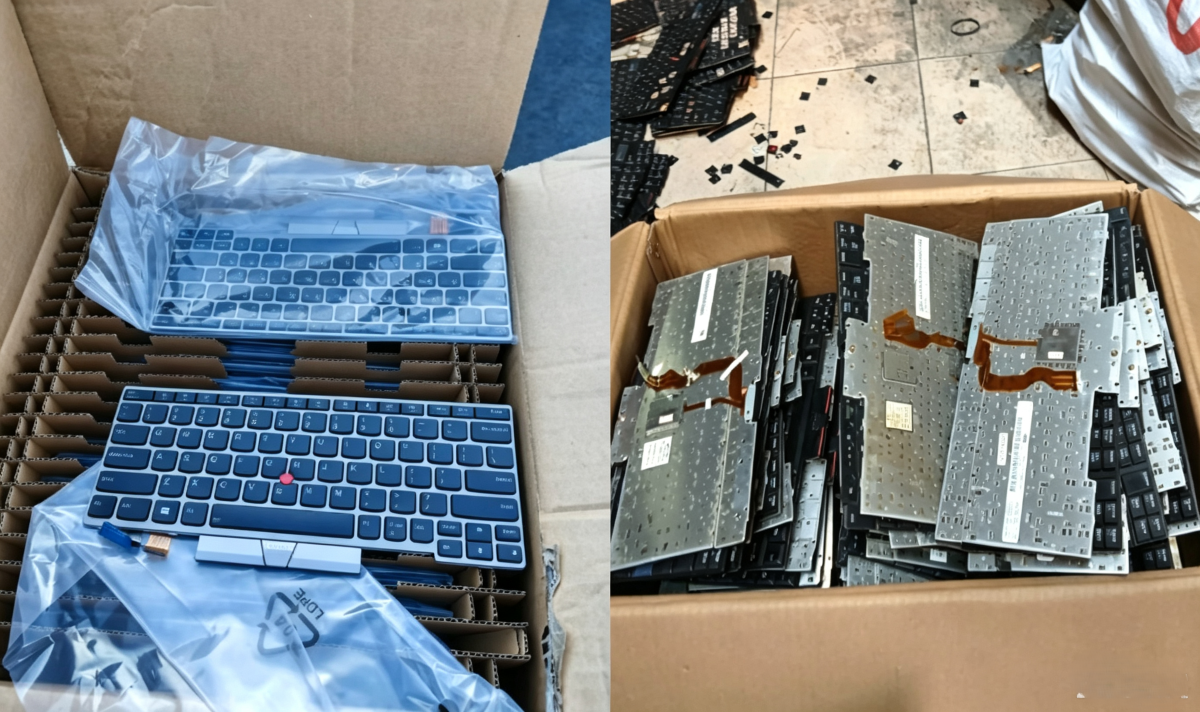
Recycling of surplus keyboards in Hong Kong: From burden of inventory to circular resource transformation
As a global electronic trade hub and logistics transit center, Hong Kong constantly handles a vast amount of electronic peripheral products. The formation and recycling of surplus keyboards have become an important issue in the urban circular economy development. These surplus keyboards, either due to technological updates or changes in orders, accumulate in warehouses, or due to damaged packaging or incompatible specifications, cannot enter regular sales channels. They seem to be "by-products" of industrial development, but through a scientific recycling system, they can achieve the dual values of resource regeneration and environmental reduction, highlighting Hong Kong's unique advantages in electronic waste disposal.
The sources of surplus keyboards in Hong Kong are diverse. The rapid iteration of the electronic industry has shortened the update cycle of keyboards to 1-2 years. Older models, due to incompatible interfaces and lagging functions, quickly exit the mainstream market, resulting in a large amount of unopened inventory; the fluctuation of orders in the Pearl River Delta manufacturing sector leads to the cross-border inflow of surplus materials to Hong Kong warehouses, with keyboards accounting for a significant proportion; differences in specifications and quality inspection standards in foreign trade also cause some products to be returned to Hong Kong due to failing to meet the requirements of the target market. According to data from the Hong Kong Environmental Protection Department, among the 70,000 tons of electronic waste generated annually in Hong Kong, surplus electronic keyboards account for 15% and occupy a considerable share among them. If not handled properly, it will cause waste of storage resources and may even trigger environmental risks.
The material composition of keyboards determines their recycling value and environmental necessity. A standard keyboard consists of multiple components such as plastic shells, metal supports, circuit boards, and rubber keys. Plastic accounts for more than 60% of it and can be recycled through crushing and reshaping; metal components contain common metals such as copper, aluminum, and iron, and circuit boards contain precious metals such as gold and silver, with a recovery rate of over 95%. At the same time, brominated flame retardants used in keyboard production, lead, cadmium and other heavy metals, if randomly dumped, will seep into the soil and groundwater, and if incinerated, may release toxic gases, posing threats to the environment and human health. Hong Kong has provided institutional guarantees for the recycling of surplus keyboards through its comprehensive environmental protection regulatory system. According to the "Waste Disposal Ordinance", any entity engaged in the storage and treatment of electronic waste must obtain a disposal license issued by the Environmental Protection Department, and import and export of such waste must apply for licenses. Landfills are completely prohibited from accepting electronic waste, effectively preventing illegal disposal. The "2023 Product Environmental Responsibility (Amendment) Ordinance" to be effective in 2024 further optimizes the producer responsibility scheme, building a full-chain regulatory framework for the recycling of electronic waste, including keyboards.
In terms of the recycling processing model, Hong Kong has formed a hierarchical disposal system that combines efficiency and environmental protection. For surplus keyboards in good condition but only due to outdated models accumulating in warehouses, they are professionally tested and sold to price-sensitive emerging markets through compliant channels, achieving secondary use; for some products with damaged functions but with intact core components, the keyboard shafts, connection lines, metal supports, etc., can be extracted for reuse in the repair market to extend the product life cycle; for keyboards that cannot be repaired or have low dismantling value, they are separated through professional equipment - plastic is crushed, cleaned, and reshaped for the manufacture of new plastic products, metal components are melted and purified for recycling in the manufacturing chain, and circuit boards are handed over to professional institutions for the extraction of precious metals. Licensed recycling enterprises located in Yuen Long and Tuen Mun, equipped with automated dismantling equipment, can finely dismantle hundreds of keyboards per hour, achieving a resource recovery rate of over 90%, far exceeding the average level of ordinary electronic waste. At the same time, for the leftover inventory products of enterprises, the Hong Kong recycling agency also provides data security protection services that comply with international standards. Through logical deletion, physical destruction, etc., it ensures that the internal storage information of the keyboards cannot be restored, and issues a destruction certificate to eliminate enterprises' concerns about data leakage.
The recycling practice of leftover inventory keyboards in Hong Kong demonstrates the multiple values of the circular economy. From the environmental perspective, professional recycling avoids the pollution of harmful substances and reduces the demand for primary plastics and metal minerals. According to calculations, for every 1 ton of leftover inventory keyboards recycled, about 0.8 tons of carbon emissions can be reduced, equivalent to planting 4 mature trees. From the economic perspective, it not only releases storage space for enterprises, reduces disposal costs, but also creates new economic value through resource regeneration, forming a "inventory reduction - resource regeneration - market supply" virtuous cycle. From the social perspective, the standardized recycling system prevents unqualified products from flowing into the gray market, maintains market order, and provides employment opportunities for the environmental protection industry.
As a dual model of electronic trade and environmental governance, the leftover inventory keyboard recycling model in Hong Kong not only solves the disposal problems of cross-border electronic leftovers, but also interprets the concept of "urban mines". In the context of increasingly strict global environmental requirements and the continuous iteration of the electronics industry, this model will continue to optimize and upgrade, through technological innovation and system improvement, allowing every leftover inventory keyboard in the circulation to regain value, injecting lasting momentum into urban sustainable development.
Mainland phone: 13049844111
Email address: 13049844111@163.com
Hong Kong phone: 852-52664790, Liangji Recycling and Reuse Co., Ltd. We look forward to your call and jointly embark on a new chapter of environmental protection and value coexistence!
Liangji Recycling and Reuse has obtained international standard certifications such as quality management (ISO 9001), environmental management (ISO 14001), and information security management (ISO 27001), being safe, regular, and professional - we look forward to your call and jointly embark on a new chapter of environmental protection and value coexistence!